Whoever looks to Christ and lives with Him walks with Him and shares in His attitudes. In a Address to the Plenary Assembly of the Pontifical Biblical Commission (April 11, 2024), Peter’s successor, Pope Francis, urged us to emulate Jesus’ attitudes, specifically in the face of illness and human suffering.
«We all falter under the weight of these experiences, and we must help one another get through them by living them ‘in relationship,’, without turning inward and without the legitimate rebellion turning into isolation, abandonment, or despair".
From the experience of the wise and of various cultures, we know that pain and illness—especially when viewed in the light of faith—can become decisive factors in a path to maturity; for suffering, among other things, allows us to distinguish what is essential from what is not.
Pope Francis maintained that it is above all the Jesus' example He shows us the way—the attitude we must adopt in the face of illness and suffering, both our own and that of others—and how to translate that into meaningful action: «He urges us to care for those who are ill, with the determination to overcome their illness; at the same time, he gently invites us to unite our sufferings to his saving offering, like a seed that bears fruit.». To care for and try to overcome, to bring people together, and to accept.
In fact, ever since it began of his pontificate, on March 19, 2013, he went on to teach—even when he cited the example of St. Joseph—that the Christian and human task of to protect and serve, the closeness and care of others, especially those who reach out to us or whom we can reach out to, in order to alleviate their needs (cf. also the Message for the World Day of Peace, January 1, 2021, on «The Culture of Care as a Path to Peace”»).
Pope Francis noted that our vision of faith can lead us to face suffering with two crucial attitudes: compassion and inclusion.
Compassion It is not a cheap, fleeting feeling, without commitments or consequences, or one that consists merely of words.
Benedict XVI had already observed that «the greatness of humanity is determined essentially by its relationship to suffering and to those who suffer. This is true both for the individual and for society. A society that fails to accept those who suffer and is unable, through compassion, to help ensure that suffering is shared and borne even inwardly is a cruel and inhuman society» (Encyclical. Spe salvi, 38).
Francis takes a similar line in the same address to the Pontifical Biblical Commission, emphasizing Jesus’ very compassion:
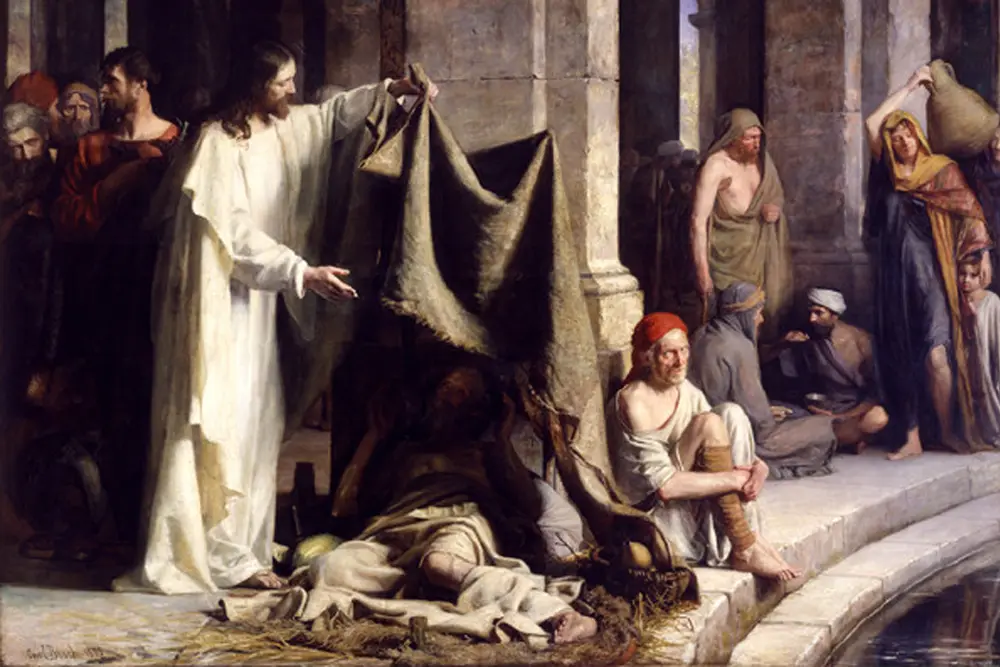
«Compassion indicates the a recurring and defining aspect of the Lord's attitude toward the vulnerable and those in need whom he encounters. Seeing the faces of so many people—sheep without a shepherd who struggle to find their way in life (cf. Mk 6:34)—Jesus is moved. He has compassion on the hungry and exhausted crowd (cf. Mk 8:2) and tirelessly welcomes the sick (cf. Mk 1:32), whose pleas he hears: think of the blind men who plead with him (cf. Mt 20:34) and the many sick people who ask to be healed (cf. Lk 17:11–19); he feels ‘great compassion’—as the Gospel says—for the widow who accompanies her only son to the grave (cf. Lk 7:13).
Great compassion. This compassion manifests itself as closeness and leads Jesus to identify with those who suffer: ‘’I was sick, and you came to visit me» (Mt 25:36).”.
Let's take a closer look: Jesus is moved, he feels compassion, and he draws near to the point of identifying with the one who is suffering.
What does this attitude of Jesus reveal to us? The mode to get closer Jesus to pain: not primarily with «explanations»—which we tend to resort to— or with empty words of encouragement and consolation, or with platitudes or a “recipe book” of feelings, as is sometimes seen in the stories of Sacred Scripture—such as in the case of Job’s friends, who try to theorize about suffering by linking it to divine punishment.
«Jesus‘ response is vital; it is made up of ’compassion that takes on‘—and in taking on, it saves human beings and transfigures their pain. Christ has transformed our pain by making it his own to the very end: by living it, suffering it, and offering it as a gift of love. He did not offer easy answers to our ’whys,‘ but on the cross he made our great ’why» his own (cf. Mk 15:34).”.
Thus, Francis points out, by taking Sacred Scripture to heart, we can purify ourselves of certain mistaken attitudes and learn to follow the path shown by Jesus: «Touching Human Suffering with our own hands, with humility, gentleness, and serenity, to offer—in the name of God made flesh—the comfort of concrete, saving support. Touch it with your hand—not just in theory». The Pope is clear and direct.".
Although it is not a biblical word, the term inclusion, Francisco points out, this clearly expresses a striking feature of Jesus’ style: seeking out the sinner, the lost, the marginalized, and the stigmatized, so that they may be welcomed in the Father's house and cured completely—in body, soul, and spirit (for example, the prodigal son or the lepers). Furthermore, Jesus desires share He entrusted that mission and spirit of consolation to the disciples: He commanded them to care for the sick and bless them in His name (cf. Mt 10:8; Lk 10:9; Lk 4:18–19).
«That is why, through the experience of suffering and illness, We, as the Church, are called to walk alongside everyone, in Christian and human solidarity, creating opportunities for dialogue and hope in the name of our shared fragility». A clear example is the parable of the Good Samaritan, which shows «what kinds of initiatives can rebuild a community through men and women who take on the frailty of others as their own, who do not allow a society of exclusion to take root, but who become neighbors and lift up and restore those who have fallen, so that the common good may prevail» (enc. Fratelli tutti, No. 67).
Speaking specifically to Bible scholars, the Pope identifies a key principle: «The Word of God is a powerful antidote to all forms of narrow-mindedness, abstraction, and the ideologization of faith: read in the spirit in which it was written, stokes the passion For God's sake and for man's sake, inspires charity and rekindles apostolic zeal». And that is why the Church has a constant need to drink—and to give others to drink—from the springs of the Word.".
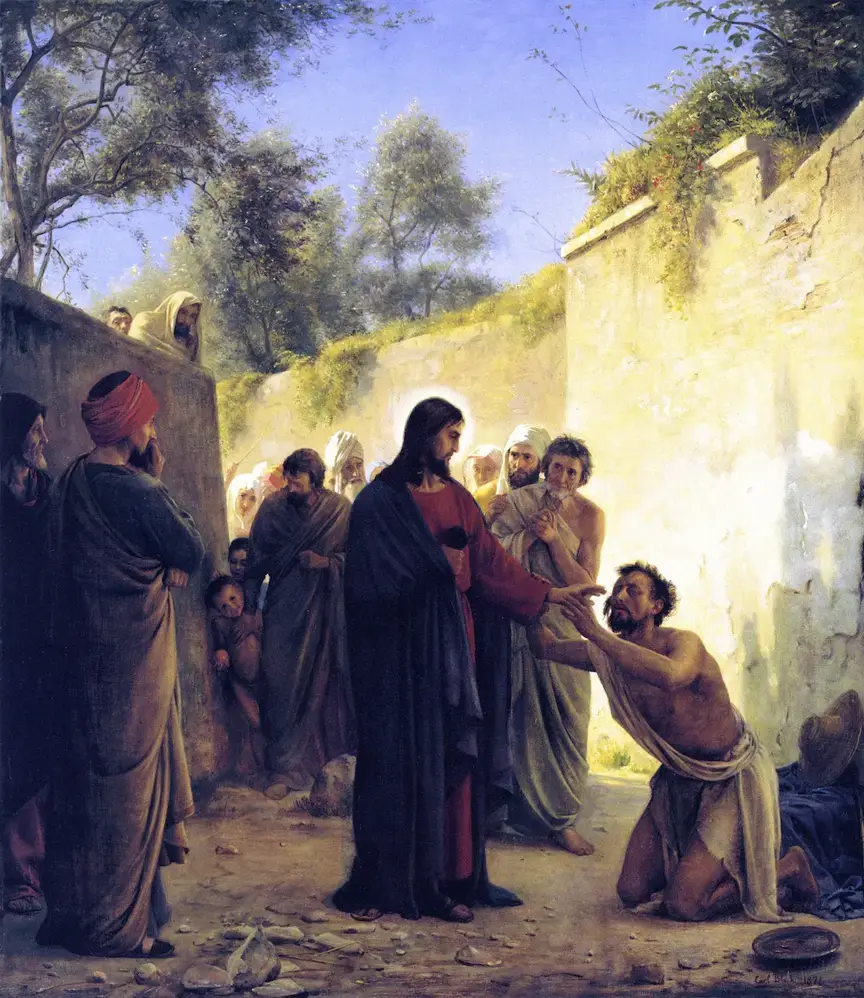
Those same attitudes of Jesus—compassion, care, and inclusion—which we must make our own, can be seen in his encounters with people with disabilities, as the Pope taught that very day in his Speech to the Academy of Social Sciences (April 11, 2024).
Jesus get in touch with them (it neither ignores nor denies them, nor marginalizes nor dismisses them); also changes the meaning of his life experience, with «an invitation to knit” a unique relationship with God to do to bloom again »to people," as we see in the case of the blind man Bartimaeus (cf. Mk 10:46–52).
Pope Bergoglio laments that today’s culture of discarding and waste easily leads these people to view their own existence as a burden on themselves and their loved ones. And thus, this mindset opens the door to a culture of death, abortion, and euthanasia.
That is why, as Peter’s successor proposes, «fighting against the throwaway culture means promote a culture of inclusion –they must be united–, to create and strengthen the bonds of belonging »to society,« working—especially in the poorest countries—"toward greater social justice »and for removing the various barriers that prevent so many people from enjoying their fundamental rights and freedoms." The results of these efforts are most visible in the more economically developed countries.
He believes that this culture of comprehensive inclusion is most fully promoted «when people with disabilities are not passive recipients, but rather participate in social life as agents of change». That is why he argues that «subsidiarity and participation are the two pillars of effective inclusion. And in this light, one can clearly understand the importance of the associations and movements »of people with disabilities who promote social participation.".
During his visit to the migrant reception centers in the port of Arguineguín (Gran Canaria), Pope Leo XIV reflected on the suffering of those forced to flee their homes due to poverty, violence, war, or exploitation. These words reflect his call to recognize the dignity of every person and not to remain indifferent to human suffering.
«As you can see, I am wearing a ring called the «Fisherman’s Ring.» Its very name takes us to the Sea of Galilee, where Christ called Peter and said to him, «From now on you will be a fisher of men» (Luke 5:10). The Church has interpreted that verse as a symbol of its mission. But here and in places like El Hierro, that command takes on a literal and painful significance. That island—small in size but great in humanity—has seen the arrival of thousands of people torn from their homeland and entrusted to the fragility of a small boat. Here there are people rescued from the sea and lifeless bodies recovered from the waters.
That is why the Successor of Peter cannot turn a blind eye to these docks. The Church cannot turn a blind eye to these waters or to any place where hunger, thirst, violence, fear, or exile continue to wound human dignity. The disciples of Jesus cannot regard as someone else’s the cry of those who cry out in the darkness.»
«Dear Blessing, even though you’re not here today, your voice is. Thank you for sharing your story with us. Your name means ‘blessing,’ and it reminds us that every human life is a blessing from God. No one can buy, sell, use, or discard it, because the image and likeness of the Creator shines forth in every person (cf. Gen 1:27). You told us that you left your country not because you wanted to, but because you had no other choice. In your words, we hear the tragedy of so many people forced to leave because poverty, war, threats, or exploitation have closed off all their paths.
»I hope this message reaches you and the many women who are victims of trafficking and exploitation: even if others have put a price on your body, God has never stopped seeing you as someone of immeasurable worth."
«This tragedy must serve as a call for self-reflection: for the nations of origin, which must create conditions of peace, justice, and development; for the transit nations, called upon to protect the vulnerable and not leave them in the hands of criminal networks; for Europe, which cannot proclaim human dignity while growing accustomed to the Mediterranean and the Atlantic being graveyards without headstones; for the international community, called upon to engage in effective and steadfast cooperation.»
Mr. Ramiro Pellitero IglesiasProfessor of Pastoral Theology at the Faculty of Theology of the University of Navarra.
Published in Church and new evangelization.
 carf@fundacioncarf.orgLandline: +34 914 029 082Mobile: +34 638 078 51145 Conde de Peñalver Street.