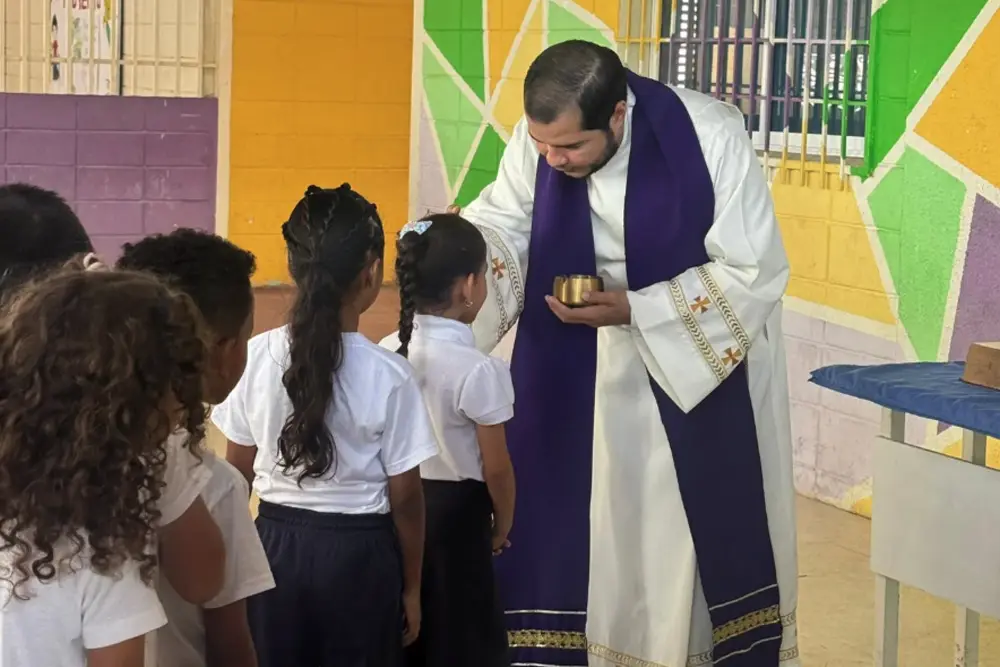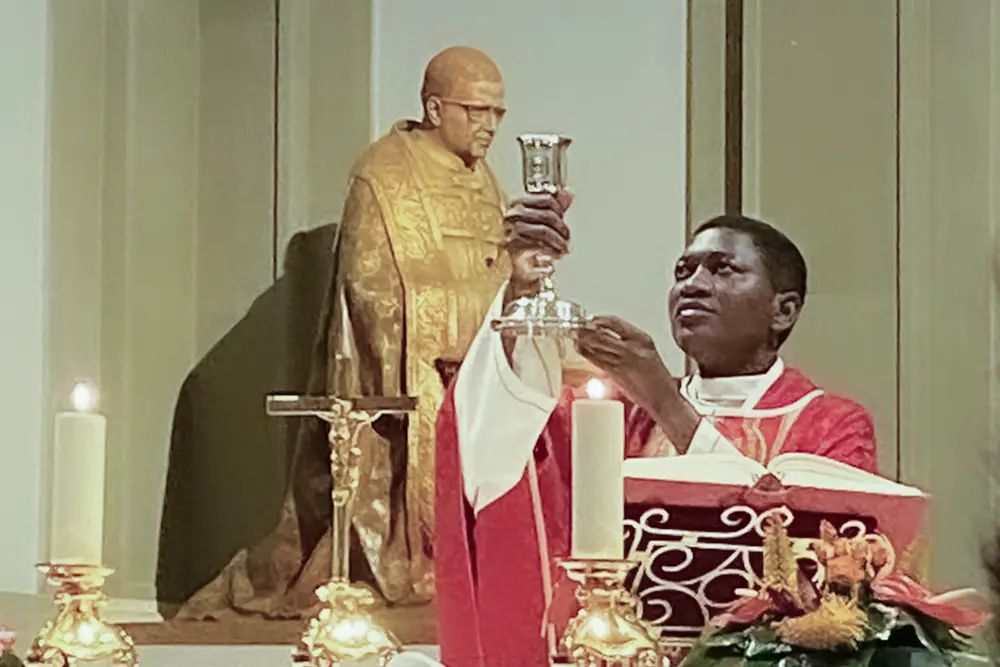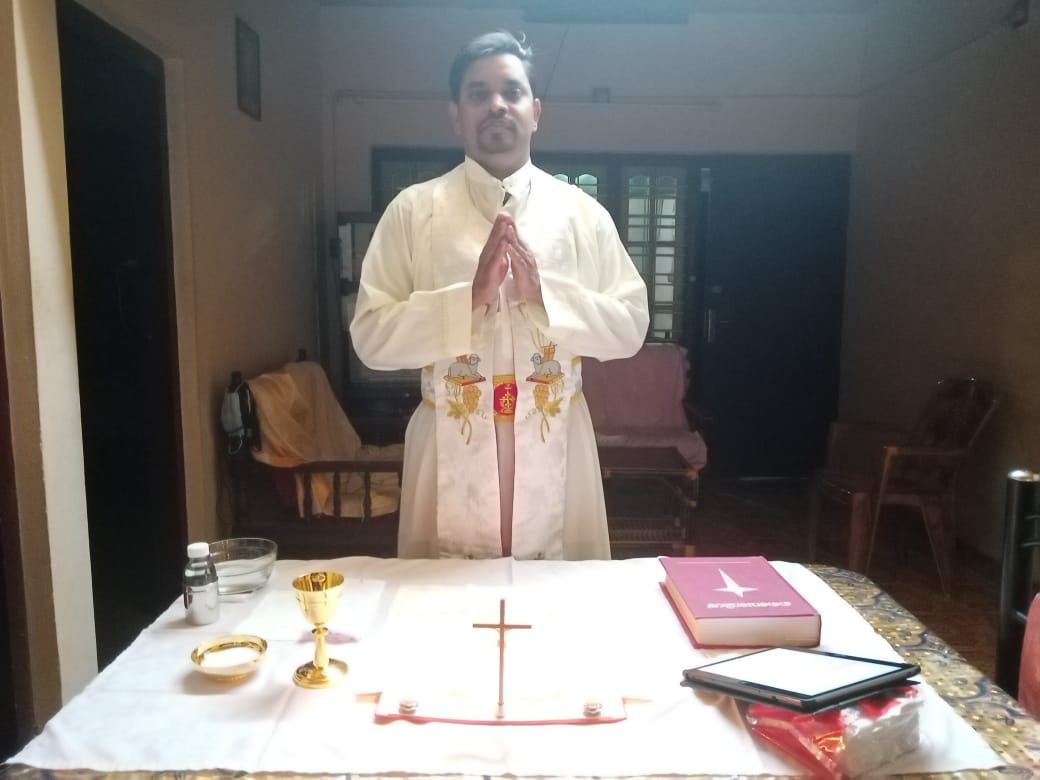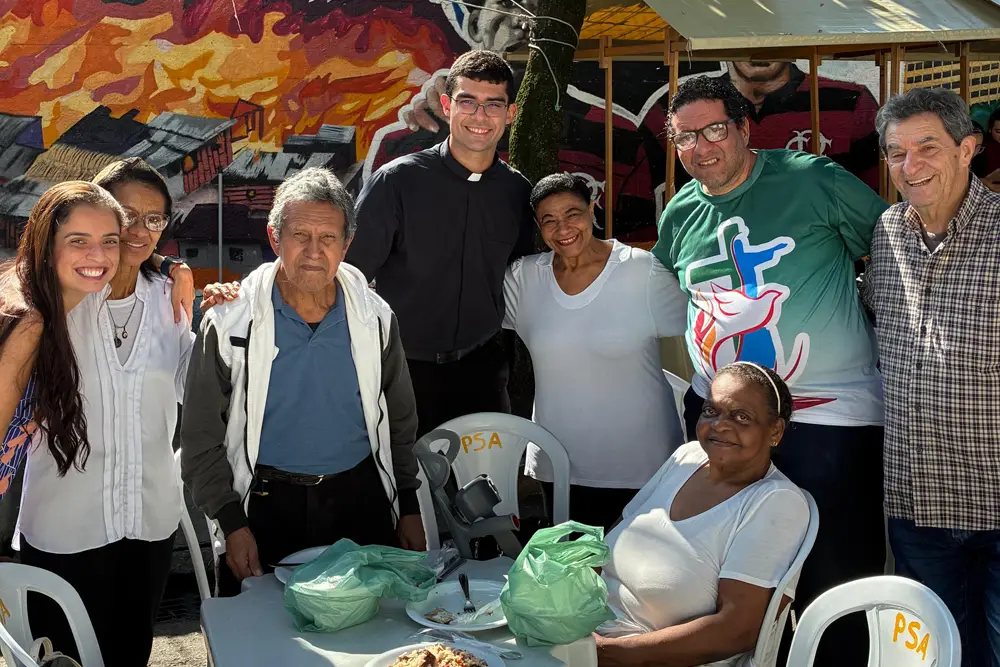
He had just finished his grueling medical school program when, in 2020, during the COVID-19 pandemic, João Victor Corrêa Maiolino began devoting more time to prayer. “”When I finished my residency, the very next day I was already with my brothers at the seminary," says this 31-year-old seminarian from the Archdiocese of Rio de Janeiro (Brazil). He has been living in Spain for a year at the Bidasoa International Seminary. In his testimony, João Victor provides us with the keys to applying medicine in the spiritual guidance and healing of souls.
João Victor Corrêa Maiolino was born in the city of Campos dos Goytacazes, in the state of Rio de Janeiro. He comes from a very modest family. His father (Francisco Vicente), a doctor by profession, spent a little more time away from home, but he was present in his own discreet and observant way. His mother (Rosane) is a teacher and applied her knowledge of pedagogy to raising him and his two older siblings: Thiago and his sister Lívia. “I’m the youngest, even though I’m not the shortest,”, she says with a smile.
“My family doesn’t have a strong Catholic tradition. We’ve all been baptized, but only my brother and I actively practice our faith. My father practices his faith more discreetly and usually attends Mass on the occasion of a funeral, a wedding, or some other family celebration. My mom and my sister practice another religion, Kardecist Spiritism,” he explains.
However, even though his parents do not practice the Catholic faith, they chose a Salesian Catholic school for his education. And in their family life, with moments of joy and fun, Their mother always made them make up after they argued with each other.
The Importance of Sports in His Personal Development
Adolescence is a time of change and rebellion, but João Victor went through it without much fuss. His concerns were much more about sports than anything else. “What I was passionate about was playing basketball. I didn’t like studying—I just passed my classes and that was it. However, I played basketball at a high level, to the point where I moved to Rio de Janeiro at age 16 to play for the Fluminense club,” he says.
This athletic experience helped João Victor a great deal in his personal development, because It allowed him to develop very important skills, such as teamwork, discipline and the ability to prepare for major challenges under pressure. However, he did not continue his athletic career because he suffered several injuries, and at age 17, he had to choose between basketball and attending college. He chose to go to college.
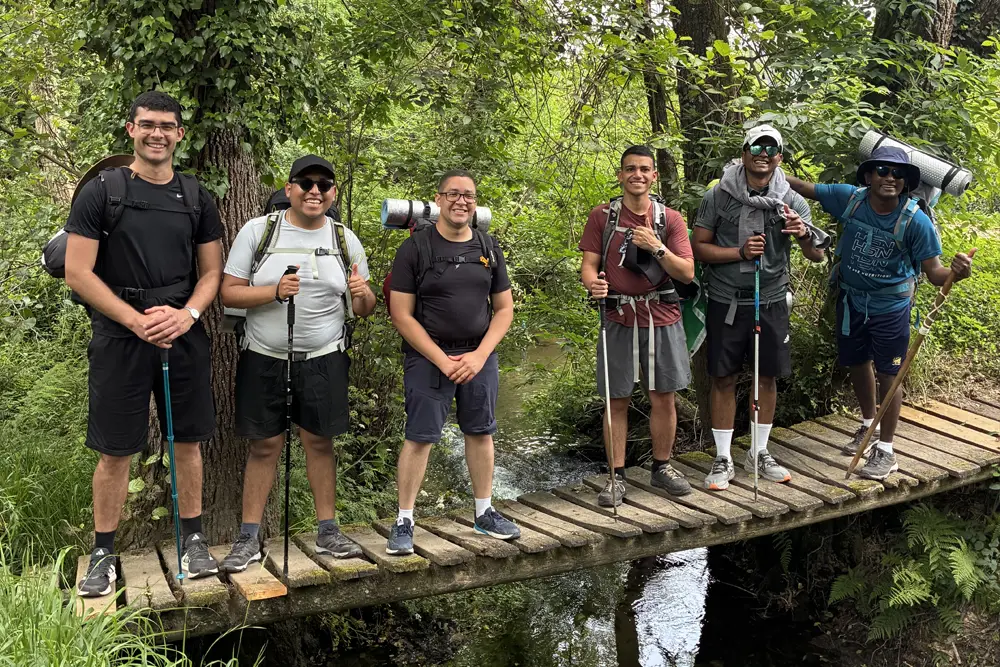
The tough six years of medical school
“I chose to study medicine. Since it’s a very competitive field in Brazil, I had to study really hard to get a spot—especially since I’d never studied that much before. In the end, it took me two years of preparatory classes to make it, and at age 19, I started college,” recalls the young Brazilian.
After six years of college, He began working as a resident physician. He had a girlfriend, and his life was going very well.
However, During the pandemic, in 2020, João Victor began to devote more time to the prayer and, as it became possible, to the sacramental life as well.
He recalls the intimate moments with God from that time: “Little by little, I grew so much in my intimacy with God and drew closer and closer to Him. Until, at a certain point, A new question arose in my heart: Why not become a priest? My first reaction was to reject that idea right away. But it didn't work. The question kept coming up again and again, until I decided to face it head-on. I shared this with my parish priest, and during the discernment process, I ended my relationship and chose to take this calling seriously.”.
For two years, while João Victor was completing his residency in Family and Community Medicine, he discerned his call to the priesthood. Since the residency was at the State University of Rio de Janeiro (UERJ), he lived in Rio and participated in the Archdiocese’s vocational meetings there. Little by little, doors began to open, though not without effort and courage. “When I finished my residency, the very next day I was already with my brothers at the seminary,”, judgment.
The First Seminarian from Río in Bidasoa
Thus, in 2024, he began his training as a seminarian at the Propaedeutic Seminary of the Archdiocese of Rio de Janeiro, and in early 2025, he had the opportunity to come to study at the Bidasoa Seminar to continue their education. He has been in Spain for about a year, “where I feel very at home,” he says.
When he received the invitation to study in Pamplona, he felt a mix of emotions: surprise, joy, fear, uncertainty, gratitude, and many others. “It was very unusual, because I went the first seminarian from the Archdiocese of Rio de Janeiro to come to Bidasoa to study the first year of philosophy. Until then, everyone else had come solely to begin their studies in theology. For me, this opportunity has been a great blessing from God.”.
Regarding the Church in Brazil He says that reality is very diverse in a country this large. And something new is changing: “I get the impression that, Right now, there is a growing movement toward faith, especially among young people, driven in part by digital apostolate initiatives.”.
This young Brazilian man says that Many young people are discovering a certain emptiness in today's world. See how social media, especially platforms like TikTok, are taking up more and more of people’s time, but often without helping them find a deeper meaning in their lives. When they discover that the Church has a solid history spanning two thousand years—one that continues to be tangibly present in the lives of so many people—they feel a desire to get to know it better, and many end up drawing closer to the faith.
The Archdiocese of Rio de Janeiro has a very active pastoral life, and depending on the region, one can find different charisms. As a result of this reality, There are a large number of vocationsYes, both for diocesan life and for the religious life of men and women.
There are 162 seminarians at the Major Seminary and 41 at the Preparatory Seminary. “Without a doubt, this high number is also the result of the excellent work of Cardinal Don Orani, the prayers of the people of God, and the reawakening of faith among young people that I mentioned earlier,” he says.
He also points out that there are quite a few priests in the Archdiocese of Rio de Janeiro, but since it is such a large city, “I think that if there were more, it would be even better,” especially because of the need for priests in outlying areas. “Furthermore, there are priests who live alone and, in some cases, are somewhat isolated, without much contact with fellow priests, which would help them live out their brotherhood more fully,” he laments.
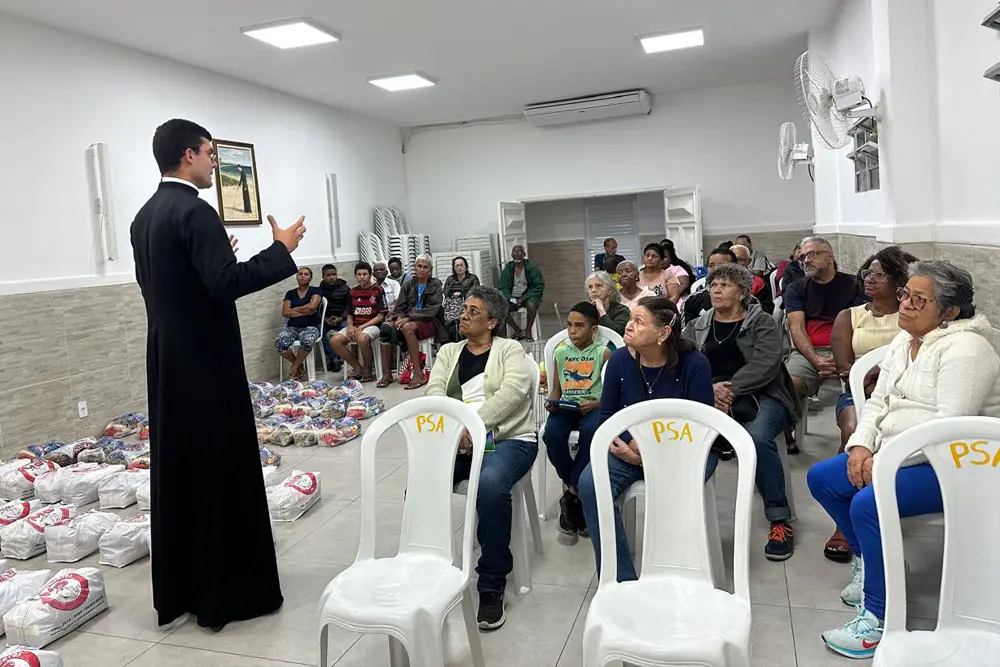
As an example of the pastoral, social, and charitable work carried out by the Church in its diocese, he cites his home parish, Santos Anjos. It grew out of a project promoted by Don Hélder Câmara, called the São Sebastião Crusade, which included the the construction of a church, ten apartment buildings for families living in the favelas, a school, and a parish center dedicated to technical and vocational training. The idea was to provide opportunities to those most in need in a high-income neighborhood like Leblon.
João Victor recalls that Brazil is a nation with a deep-rooted Catholic tradition, but for many years, faith has been viewed and lived primarily as a cultural expression, without ever reaching a deeper level of experience and without understanding the most basic aspects of faith.
“This has led to the growth of Protestant communities in recent decades, which, in turn, has become an opportunity for Let us Catholics deepen our own formation ”and may we be able to give an account of our faith and the hope that is within us,", he says enthusiastically.
Another major challenge is indifference toward God. “We live in a culture where many people organize their lives as if God did not exist, and this is not limited to Europe. It is, without a doubt, a major challenge for evangelization. However, I believe it can be overcome, especially through the example of one's life. A life that is consistent, centered on God, and focused on the people closest to us is ”like a candle that burns itself out to bring light and warmth to others,", says this seminarian.
As for his experience in Spain, many things have surprised João Victor. First of all, the entire history that speaks to us through architecture, through the great temples, and through a millennia-old culture that remains present not only in the buildings but also in the way many people live their lives.
“I spent the Easter in Granada and I had the chance to see how practically the entire city took part in the processions: some as float bearers, others playing in the bands, and still others simply accompanying or watching the brotherhoods pass by. What impressed me most was seeing that ”The whole city celebrated Holy Week as one,", recounts.
However, João Victor got the impression that there wasn’t always a strictly religious motive behind that participation. In other words, not everyone participated out of faith. “But I don’t see that as a problem; rather, I see it as a reflection of a society that has gradually been drifting away from God. Actually, it seems to me like a a great opportunity for evangelization, ”because it shows that there is still an open door to sow the Gospel in the hearts of many people.".
Contrasts Between Brazil and Spain
He has also noticed differences between Brazil and Spain: “It is one of the major challenges facing our country: urban violence. ”In Rio de Janeiro, drug trafficking is rampant, and many people live in fear and feel vulnerable in this climate of violence. All of this influences the way people live, think, and make decisions, since they often have to take into account potential risks that shape their daily lives,” he says.
Although we also face insecurity in Spain, it’s not comparable to your country. “A a child growing up in an environment like the one I've found in Spain, ”With a greater sense of security, you can enjoy many experiences with greater peace of mind. In the face of this problem, the Church plays a fundamental role, for only God’s love is capable of transforming hearts in a profound and genuine way,” he says.
After completing his training in Spain, he will return to Brazil to be ordained as a priest. And this raises some inevitable questions: “How can we proclaim Christ to people today? ”What kind of priest do I want to become?".
João Victor offers some insights, drawing a parallel between medicine and the priesthood: “I believe that priests, just like doctors, need to develop many skills. Not only a solid theoretical foundation, but also great sensitivity in dealing with people, keen observational skills, ”pastoral sensitivity and closeness to the people God has entrusted to him.".
But above all, he insists that A priest is a man of prayer. “The graces he receives, the fruits of his ministry, the effectiveness of his preaching, and all his pastoral work do not come solely from his own efforts, but from its correspondence with God's grace. ”In short, it is God who does the work. We are merely His instruments.”.
That is why, in order to reach people’s hearts—whether they are young people or those who are farthest from God—, A life of prayer is necessary. “We must follow the path that God shows us, listen to and recognize the voice of his sheep, protect them with our very lives, and love them. Deep down, there isn’t much to figure out: ”It's simply a matter of following in Christ's footsteps,", concludes this Brazilian seminarian.
Marta Santínjournalist specializing in religion.
João Victor’s experience reflects a process that many young people go through when they begin to consider a possible priestly vocation. God’s call does not usually manifest itself in extraordinary ways. It often arises in everyday life: a more intense prayer life, the guidance of a priest, participation in the sacraments, or a growing desire to devote one’s life to the service of others.
 carf@fundacioncarf.orgLandline: +34 914 029 082Mobile: +34 638 078 51145 Conde de Peñalver Street.