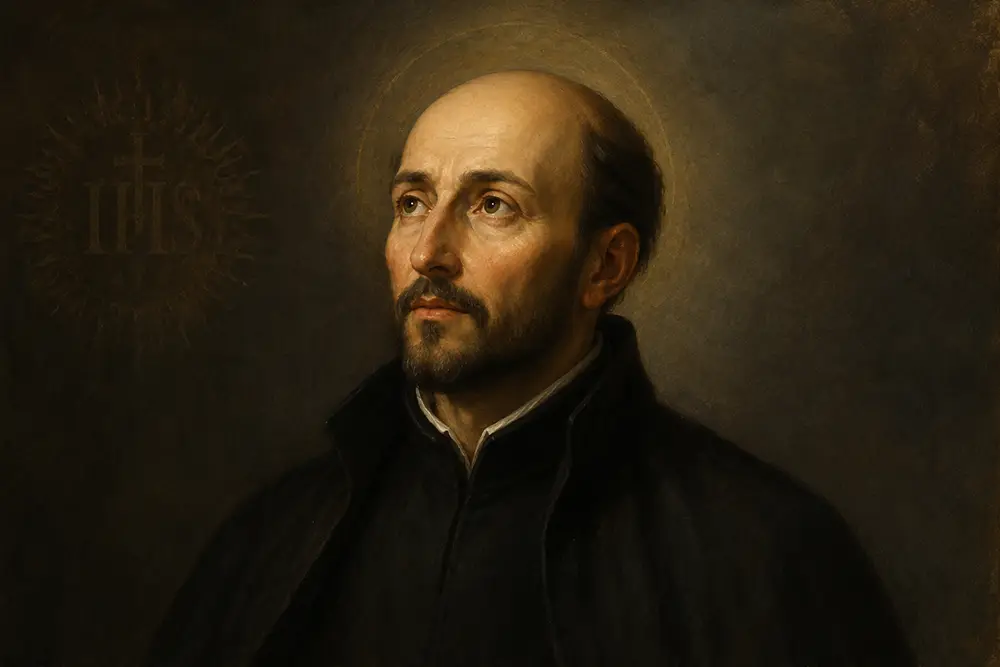
On July 31, the Church celebrates St. Ignatius of Loyola, founder of the Society of Jesus and one of the great masters of the spiritual life. His legacy goes far beyond the creation of a religious order: he left the Church a method for learning to discover God’s will in the midst of daily life.
In a world full of noise, difficult decisions, and uncertainty, Ignatian discernment remains a path to inner freedom. It is not a method for predicting the future or a technique for solving problems, but rather a path of prayer that helps us recognize how God acts in each person’s heart.
St. Ignatius of Loyola was born in 1491 in Loyola. During his youth, he dreamed of military glory and life at court. Everything changed in 1521, when a cannonball seriously wounded him during the defense of Pamplona.
His long convalescence marked a turning point in his life. With no chivalric novels to entertain him, he began reading the life of Christ and some biographies of the saints that happened to fall into his hands. Those readings sparked a crucial question in him: Why did some thoughts leave him with a deep sense of joy, while others brought only fleeting satisfaction?
Without realizing it, I was embarking on the path that would give rise to the spiritual discernment I would later express in the Spiritual Exercises.
The word «discernment» may seem complex, but St. Ignatius understood it in a very concrete way: learning to distinguish between the inner movements that draw us closer to God and those that lead us away from Him.
During his recovery, he discovered that imagining military exploits gave him only fleeting satisfaction, whereas contemplating the life of Christ or the example of the saints left him with a lasting peace. That experience became the starting point for all his spiritual teaching.
Years later, Pope Francis recounted this very episode to illustrate how Ignatius learned to distinguish between fleeting joy and authentic consolation, which endures and directs one’s entire life toward God.
Consolation and desolation: two key aspects of Ignatian spirituality
One of St. Ignatius’s best-known teachings is the distinction between spiritual consolation and desolation. Consolation is not simply a matter of feeling good. It is an inner experience that strengthens faith, increases hope, inspires us to love more deeply, and draws us closer to God even in the midst of difficulties.
Desolation, on the other hand, manifests itself as inner darkness, discouragement, loss of hope, or a drift away from prayer. Saint Ignatius observed that both states are part of the spiritual journey. The important thing is not to avoid them, but to learn to recognize them so that we can make free choices oriented toward the good.
Spiritual Exercises: A School for Discovering God's Will
The best-known fruits of St. Ignatius's experience are the Spiritual Exercises, a work that for nearly five centuries has helped millions of people deepen their relationship with Christ. It is not simply a book to read. It is a journey of prayer, silence, self-examination, and contemplation of the Gospel that seeks to order one’s life according to God’s will.
The ultimate goal is to learn to respond freely to the question that every Christian asks himself or herself at some point: «Lord, what do you want from me?».
Discernment and Vocation
Every vocation arises from a call from God, but it also requires a heart willing to listen. That is why discernment plays an essential role in the formation of those who feel called to the priesthood, to consecrated life, to marriage, or to any form of Christian commitment.
Listening to God’s voice requires silence, prayer, spiritual guidance, and a solid foundation that enables us to distinguish between our own desires, external pressures, and the work of the Holy Spirit.
St. Ignatius understood that major decisions cannot be made solely on the basis of the emotion of the moment. They require an inner freedom that only God can grant.
A highly relevant lesson for priestly formation
Ignatian spirituality remains particularly valuable for the formation of priests and seminarians. A good pastor must not only know the Church's doctrine. He or she also needs to learn to listen, walk alongside others, and help them discover God's will in their own lives.
That is precisely why human, spiritual, intellectual, and pastoral formation is so important. The Church needs priests who are capable of discerning and of teaching others to discern.
This is also one of the core missions of the CARF Foundation: to work toward ensuring that seminarians, diocesan priests, and religious from around the world receive a comprehensive formation that enables them to better serve the Church and the people God places in their path.
Finding God in All Things
Perhaps the phrase that best sums up the spirituality of St. Ignatius is one of the best-known in the Ignatian tradition: finding God in all things. This does not mean that everything is the same or that any decision automatically leads to God. It means learning to discover God’s presence at work, in the family, in one’s studies, in service to others, and even in the midst of difficulties.
This perspective transforms ordinary life into a place of encounter with Christ and turns each day into a new opportunity to respond to his call.
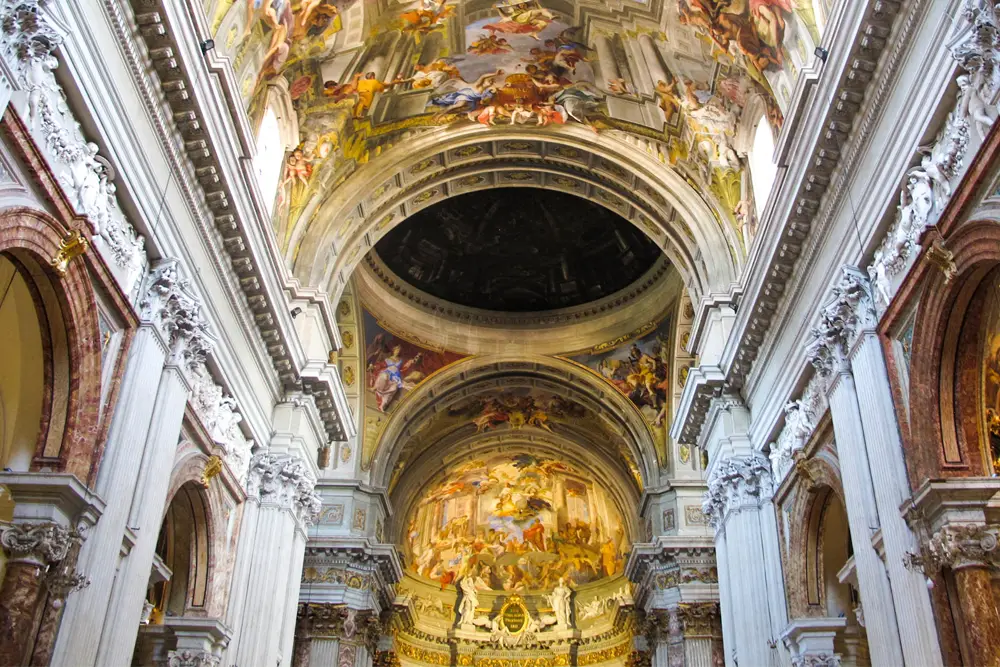
St. Ignatius Continues to Teach Us How to Listen to God
More than five centuries after his conversion, St. Ignatius of Loyola continues to help millions of Christians make decisions with freedom, peace, and confidence. His legacy reminds us that God continues to speak to the human heart. But to hear His voice, we need silence, prayer, formation, and a sincere desire to seek the truth.
In a society full of distractions and constant haste, Ignatian discernment remains an invitation to pause, look inward, and humbly ask, «Lord, what do you want from me?» It is a question that can change a life. Just as it forever changed the life of that wounded soldier who went on to become one of the Church’s greatest saints.
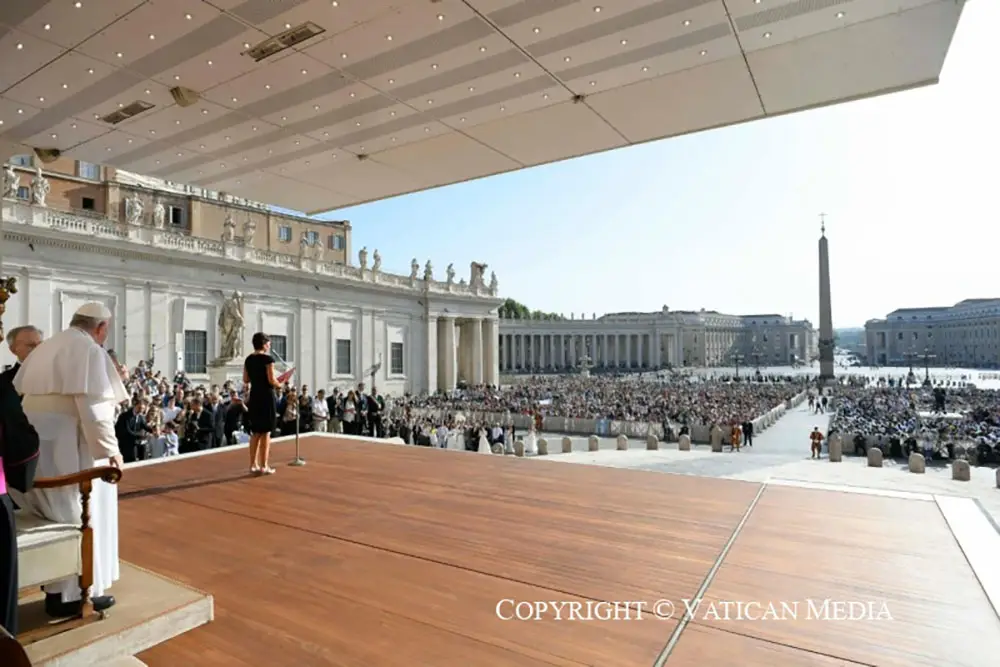
What is discernment? Words from Pope Francis on discernment.
Dear brothers and sisters:
Today we are beginning a new series of catechesis: we have finished the Catechesis on Old Age, we are now beginning a new series on the topic of discernment.
Discernment is an important process that concerns everyone, because choices are an essential part of life. Discerning decisions. We choose our food, our clothes, a course of study, a job, and a relationship. Through all of these, we shape our life’s journey, and our relationship with God is also made concrete.In the Gospel, Jesus speaks of discernment using images drawn from everyday life; for example, he describes the fisherman who selects the good fish and discards the bad ones; or the merchant who knows how to identify, among many pearls, the one of greatest value. Or the man who, while plowing a field, finds something that turns out to be a treasure (cf. Mt 13,44-48).
In light of these examples, discernment emerges as an exercise in intelligenceand also of skill and also from will, to take advantage of the right moment: these are the conditions for making a good choice. It takes intelligence, skill, and also determination to make a good choice.
And there is also a necessary cost for discernment to be effective. To do his job as well as possible, the fisherman takes into account fatigue, long nights at sea, and the discarding of part of the catch, accepting a loss of profit for the sake of those for whom the catch is intended. The pearl merchant does not hesitate to spend everything to buy that pearl; and so does the man who has stumbled upon a treasure. These are unexpected and unforeseen situations in which it is essential to recognize the importance and urgency of a decision that must be made.
Everyone must make their own decisions; no one else can make them for us. At any given moment, adults—who are free—can ask for advice or think things over, but the decision is their own; you can’t say, «I’ve lost this because my husband, my wife, or my brother decided it»: no! You have to decide for yourself; everyone has to decide for themselves, and that’s why it’s important to know discern: To make good decisions, you have to know how to discern.
The Gospel points to another important aspect of discernment: involves emotions. The one who has found the treasure has no trouble selling everything, so great is his joy (cf. Mt 13,44).
The term used by the evangelist Matthew It points to a very special joy that no human reality can provide; and in fact, it reappears in very few other passages of the Gospel, all of which refer to an encounter with God.
It is the joy of the Magi when, after a long and arduous journey, they see the star again (cf. Mt 2:10); it is the joy of the women returning from the empty tomb after hearing the angel’s announcement of the resurrection (cf. Mt 28.8). It is the joy of those who have found the Lord. Making a good decision—the right decision—always leads you to that ultimate joy; perhaps along the way you’ll have to endure a little uncertainty, reflect, and search, but in the end, the right decision will bring you joy.
In the Final Judgment, God will grant us discernment—great discernment. The images of the farmer, the fisherman, and the merchant are examples of what happens in the Kingdom of Heaven, a Kingdom that is revealed in the ordinary actions of life, which require us to take a stand.
That is why it is so important to know how to discern: major choices can arise from circumstances that at first glance seem minor, but which turn out to be decisive. For example, let’s consider Andrew and John’s first encounter with Jesus, an encounter that arose from a simple question: «Rabbi, where do you live?»—«Come and see» (cf. Jn (1:38–39), says Jesus. A very brief exchange, but it is the beginning of a change that, step by step, will shape his entire life. Years later, the evangelist would continue to recall that encounter that changed him forever; he would also remember the time: «It was about four in the afternoon» (v. 39). It was the moment when time and eternity met in his life.
And in a good, right decision, God’s will meets our will; the present path meets the eternal one. To make the right decision, after a process of discernment, is to bring about this encounter: the temporal with the eternal.
Therefore: knowledge, experience, affection, and will are some of the essential elements of discernment. Throughout these catechesis sessions, we will explore others that are equally important.
Discernment—as I have said—involves a effort. According to the Bible, the life we are to live is not laid out before us, all wrapped up and ready to go: No! We have to make decisions all the time, based on the realities we face. God invites us to evaluate and choose: He has created us free and wants us to exercise our freedom. Therefore, discernment is arduous.
We've often had this experience: choosing something that seemed good to us, but turned out not to be. Or knowing what was truly best for us and not choosing it.
Unlike animals, humans can make mistakes; they may choose not to make the right choice. The Bible demonstrates this from its very first pages. God gives man a clear instruction: if you want to live, if you want to enjoy life, remember that you are a creature, that you are not the standard of good and evil, and that the choices you make will have consequences—for you, for others, and for the world (cf. Gn 2:16–17); you can turn the earth into a magnificent garden, or you can turn it into a desert of death.
A fundamental lesson: it is no coincidence that this is the first dialogue between God and man. The dialogue goes like this: the Lord gives the mission—“You must do this and that”—and man, with every step he takes, must discern what decision to make. Discernment is that reflection of the mind and heart that we must engage in before making a decision.
Discernment is exhausting but essential to life. It requires that I know myself, that I know what is good for me here and now. Above all, it requires a a filial relationship with God. God is our Father, and He never leaves us alone; He is always ready to guide us, encourage us, and welcome us.
But He never imposes His will. Why? Because He wants to be loved, not feared. And God also wants us to be children, not slaves: free children. And love can only be lived in freedom.
To learn how to live, we must learn how to love, and to do that, we need to discern: What can I do now, faced with this choice? May it be a sign of greater love, of greater maturity in love.
Let us ask the Holy Spirit to guide us! Let us call upon Him every day, especially when we have to make decisions. Thank you.
Why Discernment Is Essential in the Formation of a Priest
Pope Francis defined discernment as an act that concerns every person, because every life is marked by decisions that shape one’s own path. It is not merely a matter of choosing between good and evil, but of recognizing, with God’s help, what is the most faithful response to the call He addresses to each of us. Discernment is, ultimately, learning to interpret one’s own life in the light of the Holy Spirit.
This ability is especially important in the formation of a priest. Before accompanying others on their journey of faith, the seminarian must learn to listen to God’s voice in his own life. The priestly vocation does not arise from a passing impulse or a personal project, but from the encounter between human freedom and God’s loving initiative. That is why it requires time, prayer, silence, and spiritual guidance to help interpret what is happening in the heart.
Discernment, explains Pope Francis, involves the whole person: memory, intellect, will, and emotions. Knowing oneself is an indispensable prerequisite for recognizing how the Lord acts and for preventing noise, haste, or one’s own interests from obscuring His voice.
In this process, prayer plays an irreplaceable role. It is not merely a moment of personal reflection, but the space where the future priest cultivates a friendship with Christ. The deeper that friendship is, the easier it becomes to recognize what leads to the Gospel and to distinguish it from what leads away from it. Discernment does not seek automatic answers, but rather an inward gaze capable of discovering God’s presence even in the most ordinary circumstances.
St. Ignatius of Loyola understood this truth from his own experience. He discovered that not all thoughts leave the same mark on the heart: some produce an immediate satisfaction that soon fades, while others generate a deep peace, a lasting joy, and a greater desire to love and serve. Learning to recognize these inner movements remains one of the most valuable teachings of Ignatian spirituality and a fundamental tool for the formation of those who will become pastors of the Church.
That is why the Church places such great importance on the integral formation of seminarians. Excellent academic preparation alone is not enough; it is also necessary to educate the heart so that the priest may freely listen to God’s will and, later on, help others discover it. A pastor who has learned to discern will be able to accompany a young person seeking his vocation, a married couple facing difficulties, or someone who wishes to rediscover his or her faith.
The CARF Foundation’s mission fits precisely within this framework. By supporting the human, spiritual, intellectual, and pastoral formation of seminarians, diocesan priests, and religious from around the world, it helps ensure that the Church has well-prepared pastors who are capable of faithfully proclaiming the Gospel and accompanying each person in discerning God’s call to their lives.
 carf@fundacioncarf.orgLandline: +34 914 029 082Mobile: +34 638 078 51145 Conde de Peñalver Street.