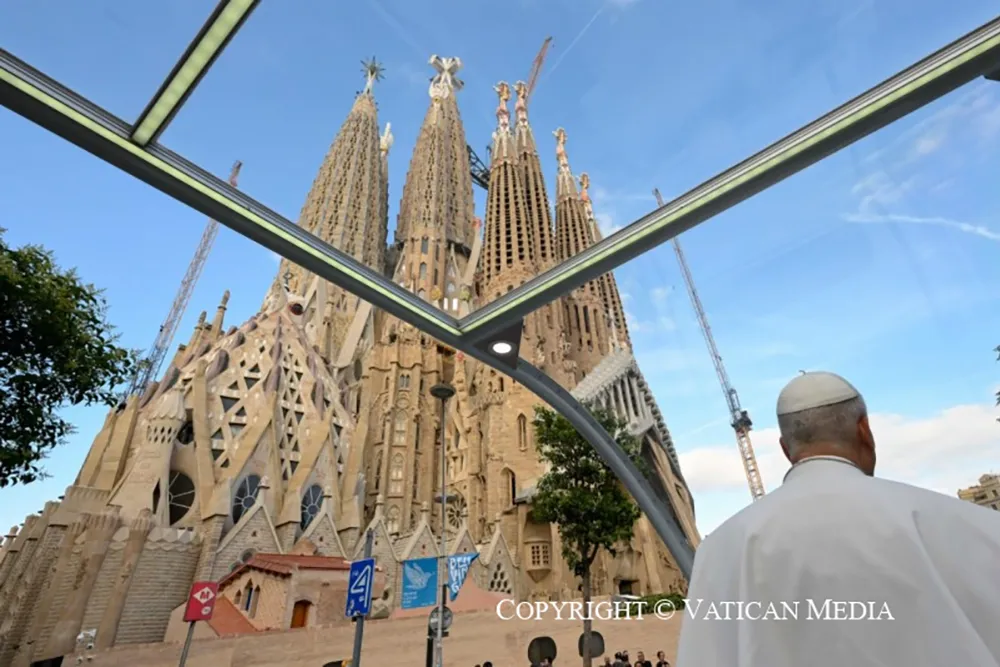
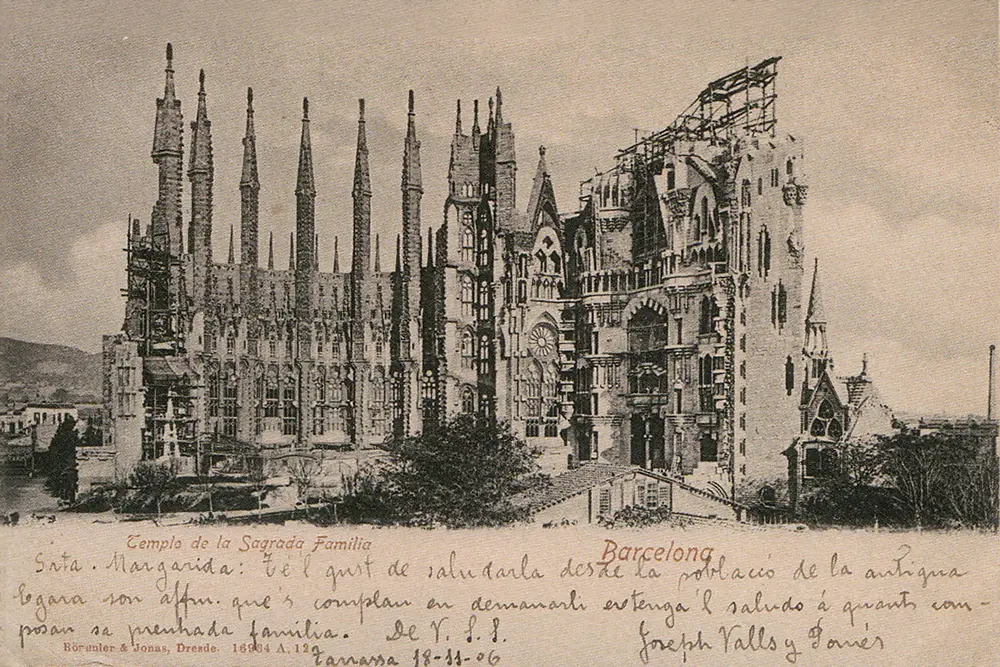
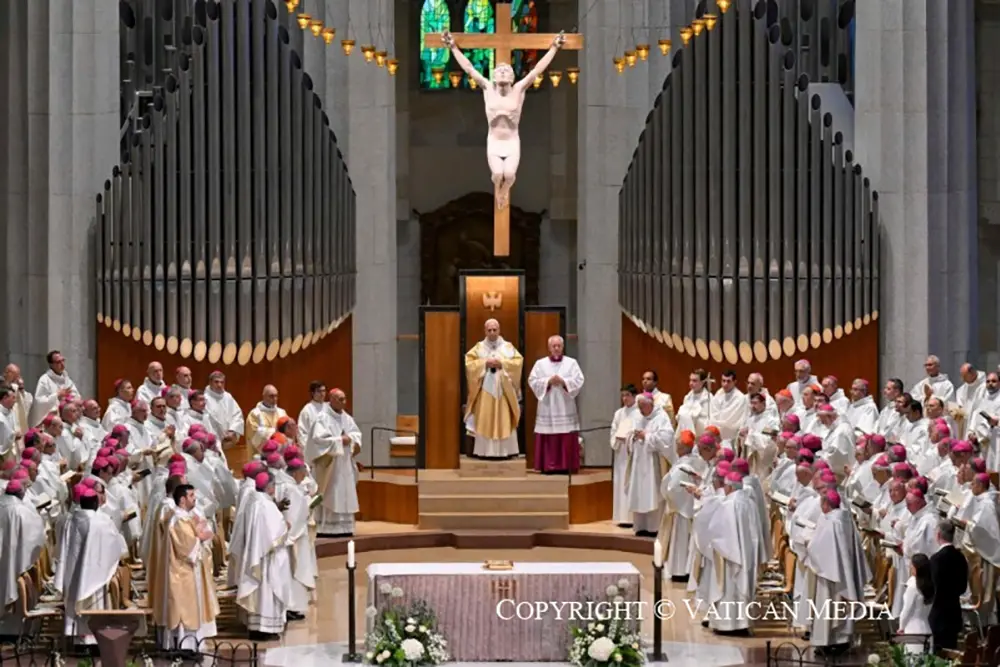
The visit of the Papa The visit to the Basilica of the Sagrada Familia in Barcelona left one of those images that remain etched in the collective memory of the Church. The blessing of the Tower of Jesus Christ—the tallest tower in the church designed by Antoni Gaudí—was much more than an architectural or cultural event. It was an occasion to remember that Faith continues to illuminate the world when it is expressed through beauty, truth, and charity.
One of the central messages of the homily was the comparison between the basilica and the Christian life itself. The Sagrada Familia is still under construction after more than 140 years. Far from considering this a shortcoming, the Pope He presented this reality as a sign of hope.
The Church It, too, is always a work in progress. And every baptized person is part of it as a living stone called to take a place in God’s plan.
This image is especially meaningful for those who dedicate their lives to proclaiming the Gospel. Christian formation never ends. Priests, seminarians, religious, and laypeople are all called to allow ourselves to be continually shaped by grace so that we may collaborate in the work that God is doing in every heart.
Evangelization is not merely about imparting knowledge, but rather about to help Christ take shape in people.
As he reflected on the words God spoke to King David, the Pope recalled a fundamental truth: it is not we who build a house for God; it is God who builds a house for us.
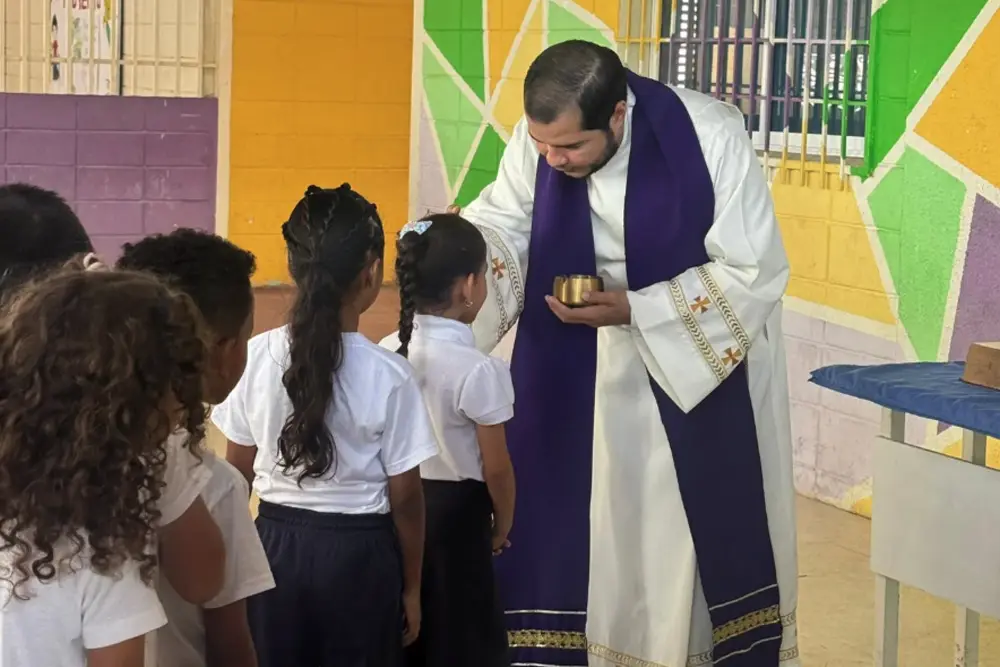
Even today, the Lord continues to call young people from all over the world to the priesthood, to consecrated life, and to various forms of delivery Christian. She does this in modern cities and in small villages, in families believers and in places where faith barely survives.
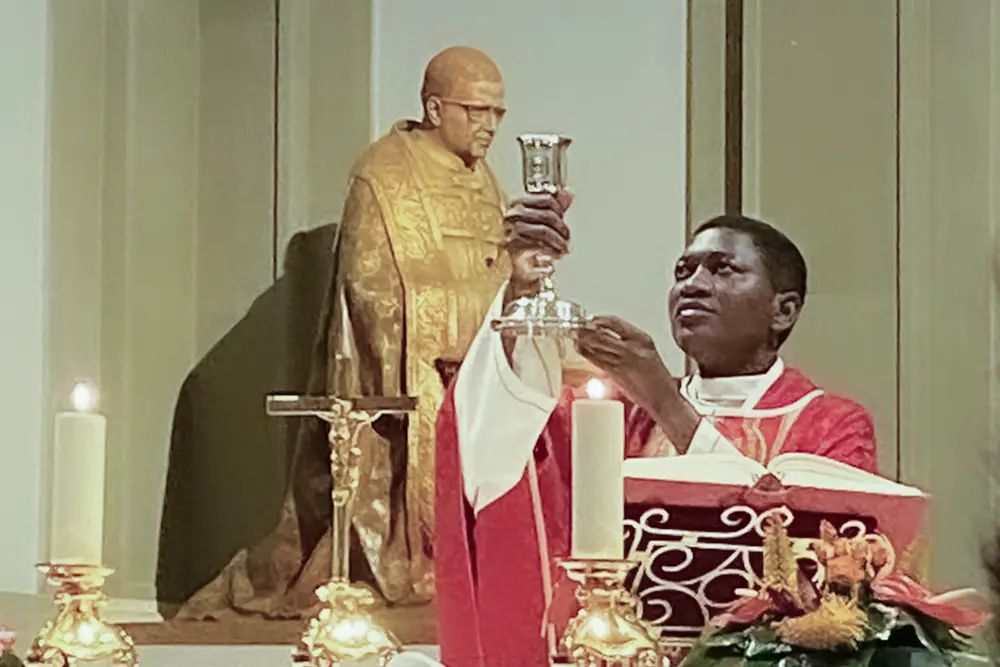
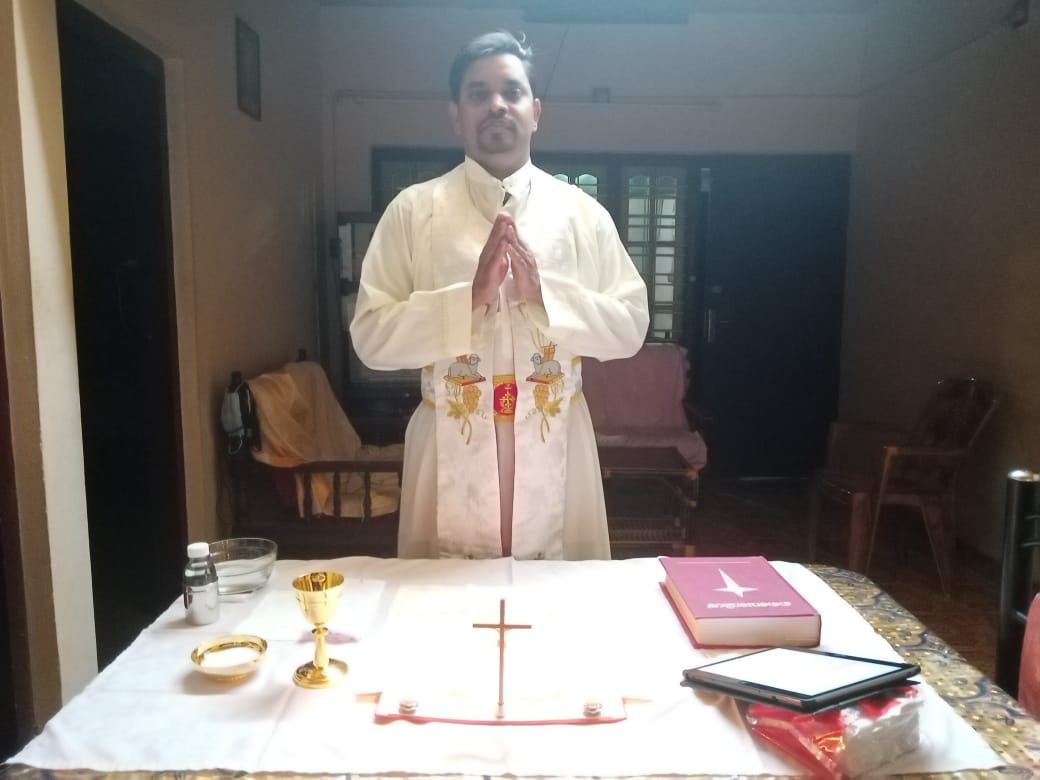
That is why the mission of institutions such as the CARF Foundation takes on such special importance for the life of the Church. The Comprehensive Formation of Priests, Seminarians, and Religious It is not a secondary task. It is a direct investment in the evangelization of the world.
Every well-trained priest will be able to guide thousands of souls throughout his ministry. Every seminarian A person who receives a solid human, spiritual, intellectual, and pastoral formation becomes a source of hope for countless people who will one day find in him a shepherd.
On the 100th anniversary of Antoni Gaudí's death, the Pope wished to honor the brilliant Catalan architect as a deeply devout man who put his talent at the service of God.
The Sagrada Familia was not conceived solely as a masterpiece of architecture to be admired. It was designed to proclaim the Gospel.
Gaudí understood something that Christian tradition has known for centuries: beauty can open paths that words sometimes fail to traverse.
Anyone who enters the basilica Discover a catechesis built with stone, light, color, and proportions. Everything leads to Christ. Everything invites contemplation. Everything speaks of God.
Even the finest work of art can become nothing more than a tourist attraction if no one helps people discover its deeper meaning. That is why the Church needs well-prepared priests who are capable of explaining the faith, providing spiritual guidance, and showing how created beauty always points to the infinite Beauty of God.
One of the most powerful moments of the homily came when the Pope reminded the congregation that one cannot believe in Jesus Christ and at the same time promote war, kill the innocent, or abandon those who are suffering.
His words resonate strongly in the international context marked by conflict, persecution, poverty, and forced displacement.
It is not a symbol of human power. It is the sign of a love that gives itself completely. It is God's response to the world's suffering.
That is precisely why the formation of future priests and evangelizers cannot be limited to the acquisition of knowledge theological. It must prepare hearts capable of walking alongside those who suffer, proclaiming hope and bringing Christ’s comfort to those who need it most.
Perhaps the most relevant message of this homily is the close relationship between evangelization and beauty.
In a culture dominated by images, the Church continues to find in art, architecture, music, and culture special ways to bring people closer to God. However, these paths require credible witnesses.
Beauty opens the door. Truth enlightens the mind. Charity transforms the heart.
That is why the Church needs well-trained men and women who know how to engage with the contemporary world without renouncing the richness of the Gospel.
The Sagrada Familia, with its towers rising toward the sky, reminds us that all authentic evangelization helps people to lift their gaze. And that behind every great work of the Church there are always people who have generously responded to God’s call.
Construction of the basilica continues. Construction of the church also continues. And for this task, they continue to be Vocations, formation, and generosity are indispensable of those who work together to ensure that Christ's message reaches every corner of the world.
[Spanish and Catalan]
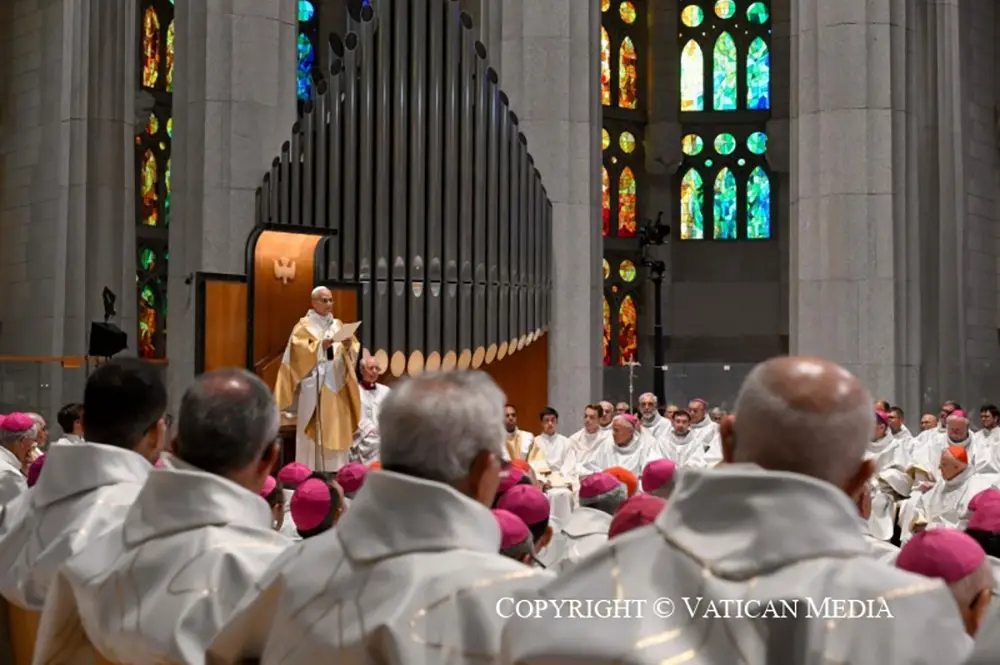
"Lord, may Your name—which is so glorious—be exalted throughout the earth!» (Sl 8:2:10). With the praise of this psalm, so full of joy and wonder, I greet all of you, dear brothers and sisters. I express my gratitude to Their Majesties; I thank Cardinal Juan José Omella, Archbishop of Barcelona, as well as my fellow bishops and all those who join us in prayer: priests, deacons, and men and women religious.
On this festive afternoon for the entire city of Barcelona, I extend my grateful greetings to the public authorities, as well as to the members of other Christian communities and other religions who are joining us in giving thanks.
Today, the Basilica of the Sagrada Família welcomes us to this beautiful city, opening its doors as if they were arms inviting everyone to this altar to listen to the Word of God. It is a church that makes us a family beloved by the Lord, nourished by his very life in the Eucharist. This is how the city of Barcelona and all of Catalonia come together in this church, a sign as well of unity and harmony, and lift their gaze to encounter the face of God the Father, resplendent in his Son made man, Jesus Christ.
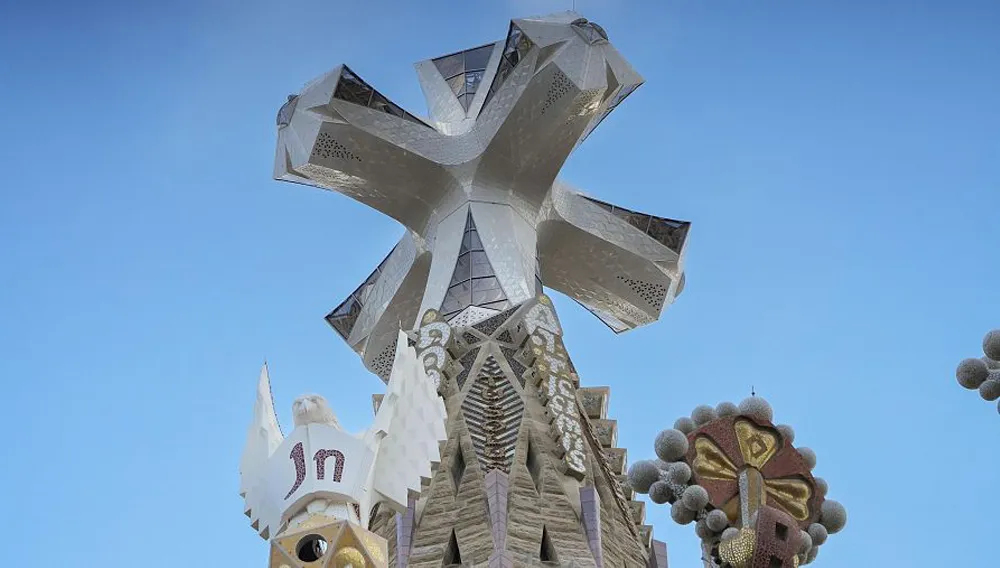
As we give thanks to the Lord for his love toward us, we praise him for all that he does in our lives. We give Him thanks especially for this extraordinary basilica, which Pope Benedict XVI consecrated in 2010, recalling that it is a visible sign of the invisible God, and that its towers rise up for His glory (cf. Homily for the Consecration, November 7, 2010). Continuing in the spirit of my predecessor’s prayer, in a few moments I will bless the tallest tower, that of Jesus Christ.
[Today, the Basilica of the Sagrada Familia welcomes us to this beautiful city, opening its doors as if they were its arms to invite each of us to this altar to listen to the Word of God. It is a church that makes us a family loved by the Lord, nourished by his very life in the Eucharist. This is how Barcelona and all of Catalonia come together in this church—a sign of unity and harmony—and lift their gaze to encounter the face of God. Father, shining forth in her Son made man, Jesus Christ.
As we give thanks to the Lord for his love toward us, we praise him for what he does in our lives. We give Him thanks in particular for this extraordinary basilica, which Pope Benedict XVI consecrated in 2010, recalling that it is a visible sign of the invisible God, for whose glory its towers rise (cf. Homily for the Consecration, November 7, 2010). Continuing in the spirit of my predecessor’s prayer, in a few moments I will bless the highest tower—that of Jesus Christ.]
This church is a single building, made up of many stones. A house that grows steadily over the years, following a single plan. All of us are the living stones of this work, which has Christ as its foundation and crowning glory, its beginning and end. Much more than a monument, the Basilica of the Sagrada Familia remains a work in progress today, reminding us that the Christian life is always a journey, because it is a project that God is carrying out.
We do not, therefore, inhabit an unfinished work, but a temple still under construction. Its imperfection is not a flaw, for it bears witness to a desire; it does not signify a lack, but rather expresses a promise that we wish to honor consistently. Our gratitude thus becomes a commitment as we cooperate in God’s plan—that is, in the building to which He Himself calls us. Since we are the temple of the Holy Spirit (cf. 1 Co 6:16:19), this work is one with our lives, which God conceives as a masterpiece that we are to create together, and He calls us to collaborate with Him (cf. 1 Co 3,9).
In this regard, we hold dear in our hearts the words the Lord spoke to King David: «Are you going to build me a house to be my dwelling place?» (2 Sam 7.5). On the contrary, «the Lord tells you that he is going to build a house for you» (v. 11).
Through this passage, Scripture teaches us that it is not we who give God a place, as if He were an element in a series or part of a whole greater than Himself. Rather, it is God who gives us a place, and the place He gives us is His own heart: the place of the Son, for us who were once strangers; the place of the Beloved, for us who are sinners.
His will is fulfilled through Jesus; we can therefore understand the meaning of what we heard in the Gospel, when the Lord says to the Pharisees: «Unless you believe that “I am,” you will die in your sins» (Jn 8,24).
Strong words—but they are by no means threats or blackmail. They are an invitation to salvation—that is, a call to freedom from Christ, who desires for us the ultimate, eternal good.
In the face of evil, the Lord is always with us, always on our side. “I am”: this is the Most Holy Name that God revealed to Moses from the burning bush, revealing His unwavering faithfulness. Becoming man, He becomes for us the Emmanuel, the source of grace and forgiveness, of salvation and new life.
Dear brothers and sisters, we cannot believe in Jesus and promote war. We cannot believe in Jesus and kill the innocent. We cannot believe in Jesus and abandon those who suffer, those who weep, and those who flee from misery.
On this night, then, the Cross of Christ, which crowns this basilica, is the Cross of the last, who become the first; of sinners who become saints; of the dead who are raised to life.
The three facades of the Sagrada Família bear witness to this: the First becomes the Last for us at Christmas; through his sacrifice, he redeems us through the Passion; his death gives us eternal life, making us partakers of divine glory. As we admire the tower of Jesus Christ, I looked over at her, Praise be to the One who reveals to us the truth about God and the truth about ourselves.
By looking to Christ, we can see the world with fresh eyes: the tower of the cross then becomes a symbol of charity, for God loves us in this way, transforming an instrument of death into a sign of hope. On the cross of Jesus, our faith reaches its peak, as professed by the inscription found at the base of the spire: “You alone are Holy, You alone are Lord, You alone are Most High”. This cross shines by day, reflecting the sunlight, and shines by night, illuminating the city like a lighthouse overlooking the Mediterranean.
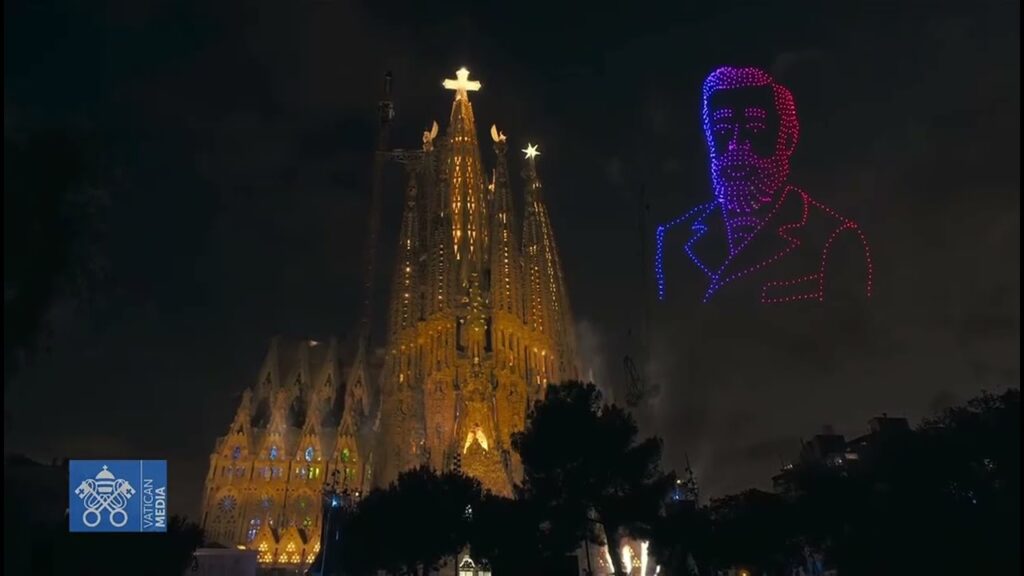
Yes, the light of Christ shines in the darkness, even though the darkness has not accepted it (cf. Jn 1.5.11). However, this rejection does not mean that God’s love is lacking: «When you have lifted up the Son of Man,» says the Lord, “then you will know that I Am and that I do nothing on my own, but speak just as the Father has taught me” (Jn 8,28).
We must pass through the passion of the Crucified One to be enlightened by the glory of the Risen One: for from all eternity, the Father has taught us to give our lives, and the Son—who receives life from the Father—gives it to all through the power of the Holy Spirit. This is precisely why the cross is the radiant sign of his love.
It is faith that gives shape to the stones and meaning to the building we inhabit together. In our prayer, therefore, we discover the original connection between all things and God, the creator of heaven and earth: He is the artist who has imprinted His splendor on the cosmos.
Created in His image, humankind responds to God’s work with its own ingenuity: this is how the artist transforms talent into praise and creativity into a testimony to the Creator Himself. As an architect with a fervent faith, the venerable Antoni Gaudí conceived these spaces with the desire to recount the mysteries of the Lord’s life: in this way, he has offered us a spiritual pilgrimage that leads to an encounter with Christ—born, died, and risen for us.
Together with Gaudí, whose centennial of his death we are commemorating, we remember and give thanks this afternoon to all the promoters and benefactors, the artists, and the workers who collaborated in the construction of an architectural masterpiece—one that is also an eloquent catechesis made of stone, color, and light.
In this way, the Church renews the Biblia pauperum of the ancient cathedrals, which are themselves messages of evangelization of great richness. In this age of imagery, it is even more evident how art and beauty are preeminent channels of evangelization.
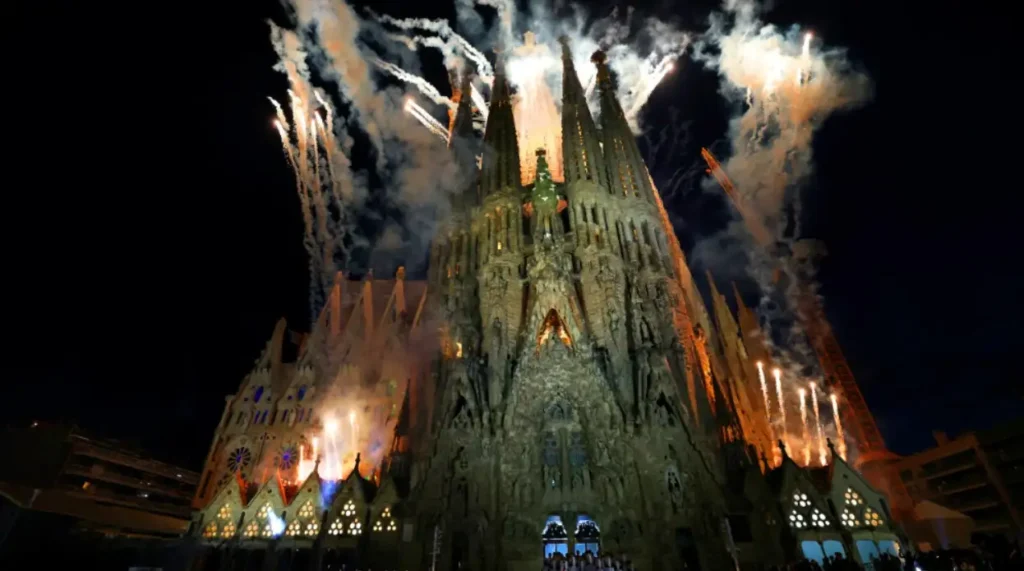
Dear brothers and sisters, the beauty of this church inspires us to learn more and more from our Master and Lord the art of living according to His Gospel. While We lift our eyes to Him, the Crucified and Risen One, let us commit ourselves to lifting up the faces of those who lie in the dust (cf. 1 Sam 2,8).
And let us thus demonstrate that the Sagrada Família is the tallest church in the world—not to stand out in worldly rankings, but to guide the steps of God’s people as they journey through this land of Catalonia, with the cross illuminating the way, like a lamp burning brightly as they await the return of the Bridegroom.
 carf@fundacioncarf.orgLandline: +34 914 029 082Mobile: +34 638 078 51145 Conde de Peñalver Street.