
Did it really exist Jesus of NazarethWhat can we say about him from the historical point of view? Is it possible to distinguish between the Jesus of history and the Christ of faith?
These questions, which have traversed centuries of cultural and academic debate, constitute the starting point of the book Jesus of Nazareth: myth or history?, by Italian writer and researcher Gerardo Ferrara, recently available also in Spanish.
Far from proposing a complex academic treatise, the book invites the reader to walk along the path of historical research on the figure of the Nazarene, The book is an analysis of ancient sources, contemporary studies and the cultural context of Judaism in the first century.

For centuries the historical existence of Jesus was not seriously questioned. It was from the Enlightenment onwards that new questions and critical methods emerged, giving rise to an intense historiographical debate. In this context, the French philosopher Jean Guitton proposed three possible answers to the historical problem of Jesus: the critical solution, which recognizes his existence but rejects the supernatural elements; the mythical solution, according to which Jesus would never have existed; and the solution of faith, which considers the testimony of the Gospels. The book examines these perspectives to situate the reader within the contemporary debate.
From there, Ferrara proposes a journey through the world in which Jesus lived. The reader discovers the complex religious and social mosaic of first-century Judaism: Pharisees, Sadducees, Zealots and Essenes; groups that represented the different ways of living the Law and the identity of Israel under Roman domination. Understanding this context is essential in order to interpret many of the tensions present in the Gospels.
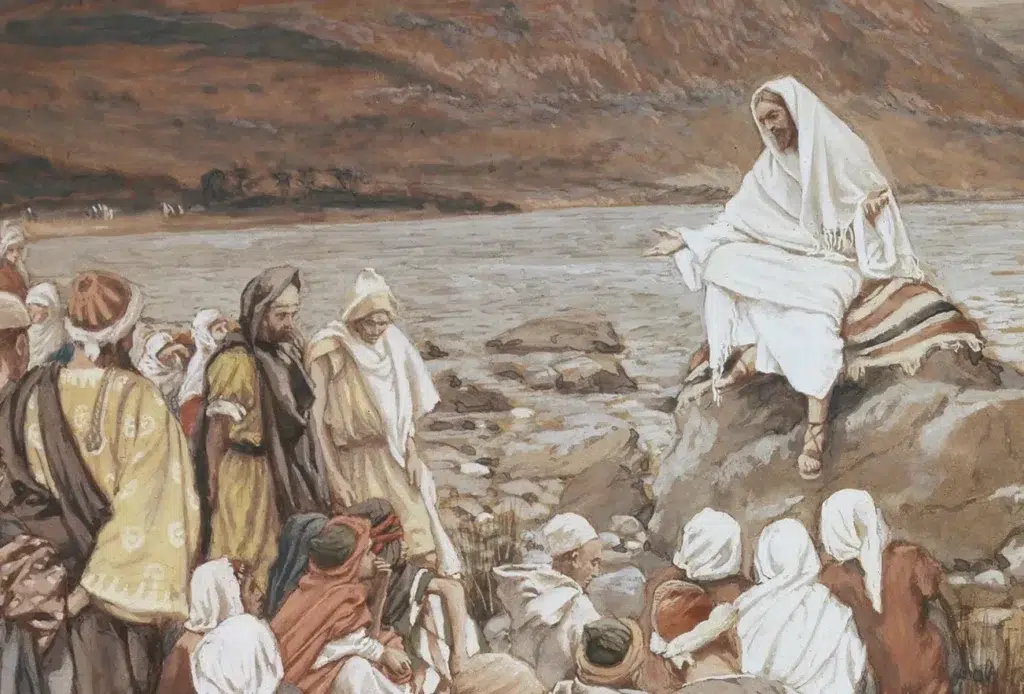
One of the most suggestive aspects of the book is the attention to linguistic and cultural details. For example, the very name of Jesus -Yehoshua in Hebrew - literally means God saves, which allows us to better understand the symbolic dimension that his figure acquired within the biblical tradition and the Judaism of his time.
The author also examines the intense messianic expectation that characterized the Jewish world in the years immediately prior to the birth of Jesus. Various traditions and ancient texts spoke of the arrival of a liberator from Judea. Even Roman historians such as Publius Cornelius Tacitus or Gaius Suetonius Tranquillus mention that in the East there was a conviction that a ruler destined to dominate the world would emerge from that region.
Among the most curious aspects of the essay is the historical analysis of the so-called star of the Nativity scene. Some astronomical studies, taking up an intuition of Johannes Kepler himself, have related this phenomenon to an extraordinary conjunction of the planets Jupiter and Saturn in the constellation of Pisces in the year 7 B.C., an event that may have been interpreted in antiquity as a sign of the birth of a great king.

The book also addresses specific historical issues related to the Gospel accounts: the census ordered by Augustus, the reign of Herod the Great, the complex political situation in Judea under Roman rule, and the religious context in which Jesus' preaching arose.
Throughout the essay there are numerous references to scholars who have marked modern research on the historical Jesus -among them David Flusser, Joachim Jeremias or Joseph Ratzinger- whose research has contributed to renew the dialogue between history, philology and biblical exegesis.
The volume is the result of the adaptation and reorganization of a series of articles published by the author in recent years in cultural and historical magazines, among them Omnes y Facts for history. Now collected in a single volume, these texts offer a clear and accessible synthesis of some of the most relevant debates on the historical figure of Jesus.
The Spanish edition is also published in stand-alone format through Amazon in order to facilitate its international dissemination and make this material available to a wider public interested in the historical study of Christianity.

Beyond strictly religious issues, the figure of Jesus of Nazareth has profoundly marked the history of humanity. Even non-Christian thinkers such as Friedrich Nietzsche, Richard Rorty or Benedetto Croce have recognized the extraordinary cultural influence of Christianity in the formation of Western civilization.
At a time when public debate often oscillates between superficial skepticism and ideological simplification, Jesus of Nazareth: myth or history? invites us to rediscover the value of the historical method, the serious study of the sources and the dialogue between history, culture and faith to approach the most decisive figure in the history of mankind.
Born in Italy in 1978, he graduated in Political Science, with a specialization in the Middle East, at the prestigious Orientale University from Naples, and spent many years abroad (Spain, France, Argentina, Tunisia, Lebanon, Israel) for study and work.
His interests range from Music (he studied piano), Linguistics and Philology, to studies on Christianity, Judaism and Islam, the history and culture of the Jewish people, and the cultures and literatures of the Near East.
He published the novels My brother's murderer, in 2013, and The knitting school, in 2016.
He is also a lecturer, essayist and translator of different languages, in particular Spanish, French, English and Portuguese. He has collaborated with RAI, BBC and other Italian and international newspapers (Omnes, among others in Spain) as an expert in history and politics and for the translation of videos, articles and documentaries.
Gerardo Ferrara is also the responsible for students University of the Holy Cross in Rome.
 carf@fundacioncarf.orgLandline: +34 914 029 082Mobile: +34 638 078 51145 Conde de Peñalver Street.