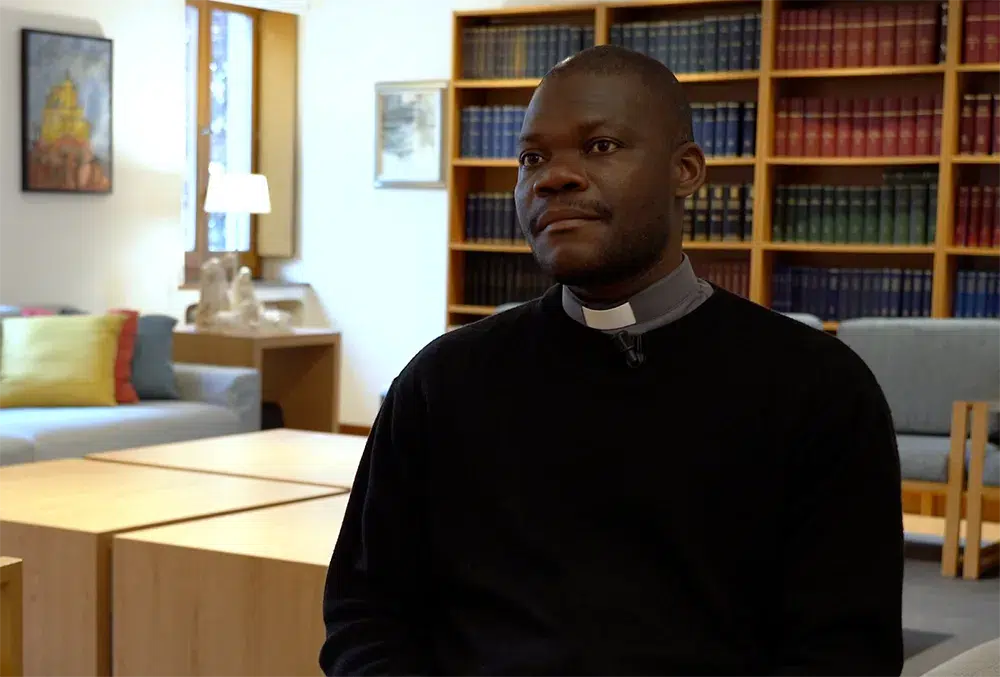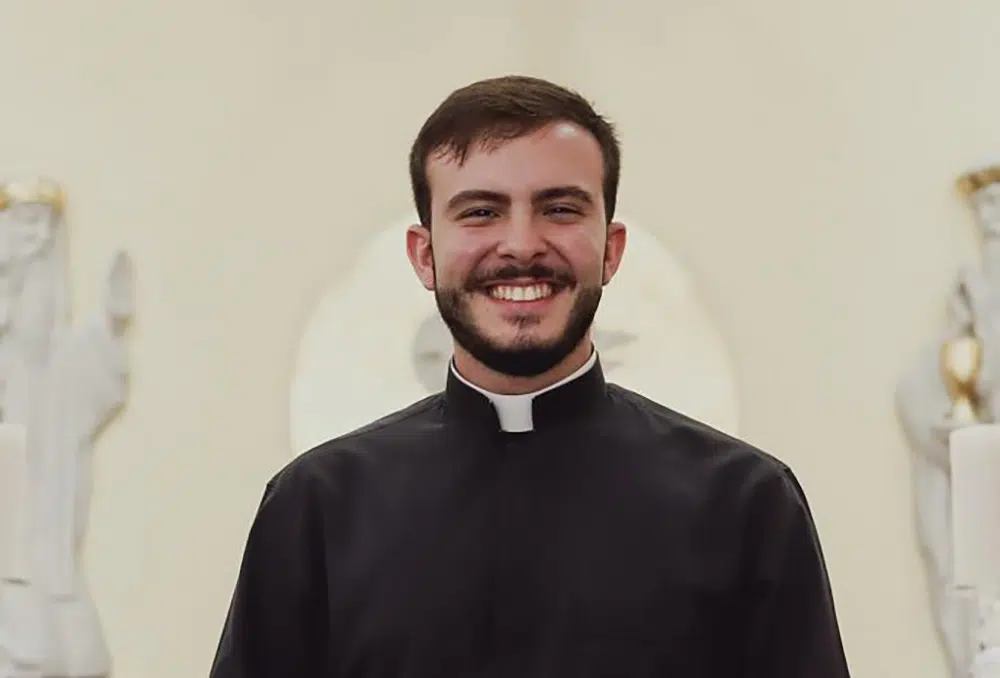
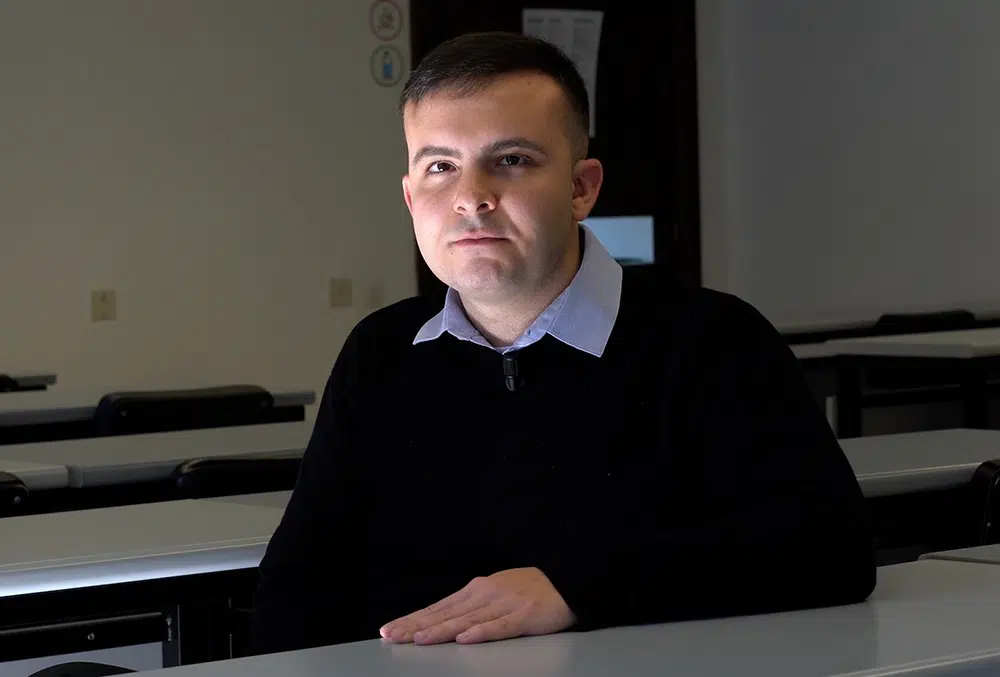
In a neighborhood on the outskirts of Rio de Janeiro, Brazil, where houses age before they are finished and families struggle to get by as best they can, he was born. José Gabriel Silva Kafa, a student who dreams of consolidating his priestly vocation.
José Gabriel is 23 years old. He is a seminarian studying his third year of theology at the Ecclesiastical Faculties of the University of Navarra. He lives and receives comprehensive training at the Bidasoa international seminarin Pamplona.
In his home, faith was not explained: it was lived. His father, a salesman, and his mother, a business administration graduate who devoted herself to the home, passed on their religion and faith with naturalness, without pretension or fanfare.
They never considered themselves a model family to be emulated; they simply took it for granted that belief in God and faith were part of everyday life. It was this stable environment that allowed José Gabriel to take God seriously without the need for dramatic breaks or episodes.
Adolescence in the parish
At the age of 14, he began serving as an altar boy. The sacristy, the altar, and his daily interaction with his parish priest gradually became the environment and place where he understood that the priestly vocation it wasn't an abstract idea.
His adolescence was spent between the parish, soccer, and diocesan gatherings: activities that he now remembers as the place where he discovered that faith could be a concrete way of being in the world.
The Confirmation course marked a turning point. There he met young people who were seeking God without reservations. That environment forced him to ask himself what he wanted to do with his own life. At eighteen, after beginning his studies in philosophy, he entered the seminary.
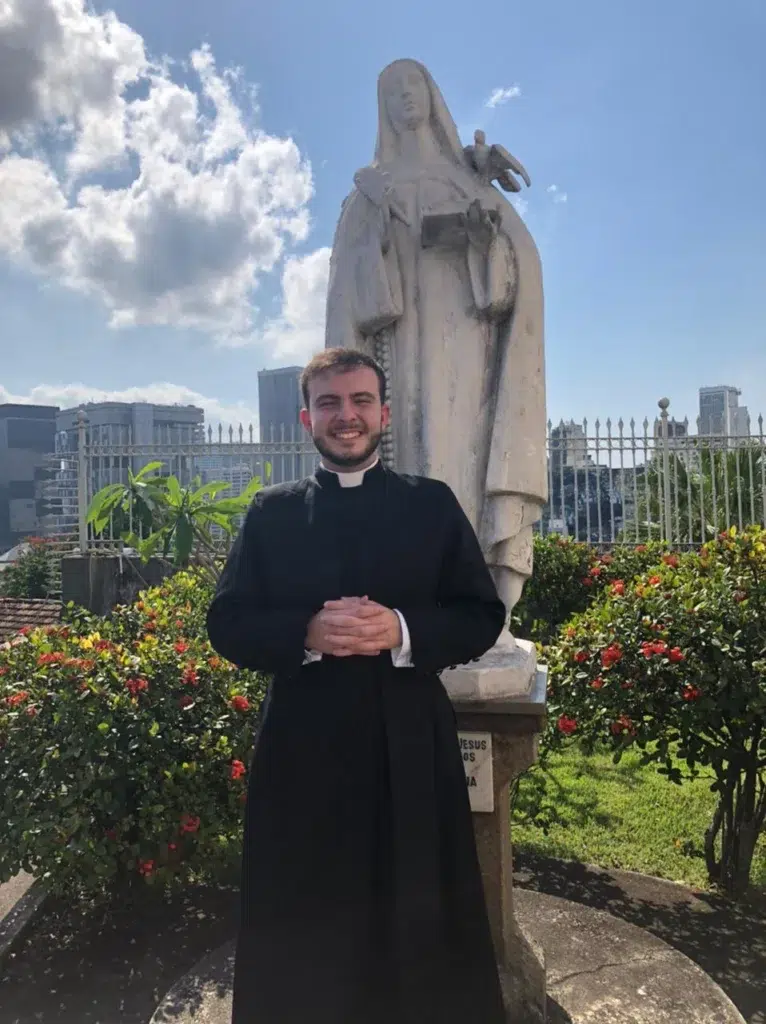
The Diocese of Rio, a complex terrain
The Archdiocese of Rio de Janeiro, one of the largest in the country, has some 750 priests spread across 298 parishes. Of the more than six million inhabitants, 43.6% declare themselves to be Catholic, but the number of people without religion and who coexist with diverse traditions is increasing: Protestants, Umbanda spiritualists, Candomblé syncretists...
José Gabriel describes this situation without drama, but with great clarity. He says that evangelizing in his country means talking about God to a population that has learned to distrust, even in matters of the heart. «Many do not believe in love because they have seen how it breaks,» he explains. That is why he admires the work of his archbishop, who is present in very different neighborhoods and communities. That pastoral style—close, constant, without artifice—is the model he looks to in order to learn and improve as a future servant of God.
When he talks about mission, he avoids clichés. For him, evangelizing consists of «living in a way that makes what you preach credible.» He is not referring to moral feats, but to consistency: a devoted life that is visible in everyday gestures. The simplicity of evangelizing by example without seeking to apply marketing techniques.
He believes that the trivialization of love and the fragility of the family have left deep wounds in many young people. That is why he insists that the Christian message can only be understood if it shows a love that is stable and capable of rebuilding.
His arrival in Spain led him to discover another way of living his faith. He appreciates the beauty of the liturgy and the intellectual seriousness of his new surroundings, but he perceives less community involvement than in Brazil. He does not express this as a criticism, but rather as a contrast: «Here, everything is well cared for and well celebrated, but sometimes there is a lack of closeness that motivates people to participate and serve.».
When asked about the kind of priest the Church needs today, he responds without embellishment: «Someone who truly loves his vocation, who studies seriously, and who prays without compromise. In a secularized context, people quickly discern whether a priest believes what he says or is merely fulfilling a role,» affirms José Gabriel Silva Kafa.
A story without fireworks
José Gabriel's journey is not based on striking miracles or extraordinary experiences. He was born into a family that was consistent in its Catholic faith, lived close to a lively parish, and underwent a slow process in which learned to listen to God amidst the daily noise.
Today, he continues on that path far from his country, in a seminary that—as he acknowledges—is also shaping him. His story is simple, but it makes it clear that a vocation can grow quietly and become solid over time.
Marta Santín, journalist specializing in religion.
Table of Contents
 carf@fundacioncarf.orgLandline: +34 914 029 082Mobile: +34 638 078 51145 Conde de Peñalver Street.