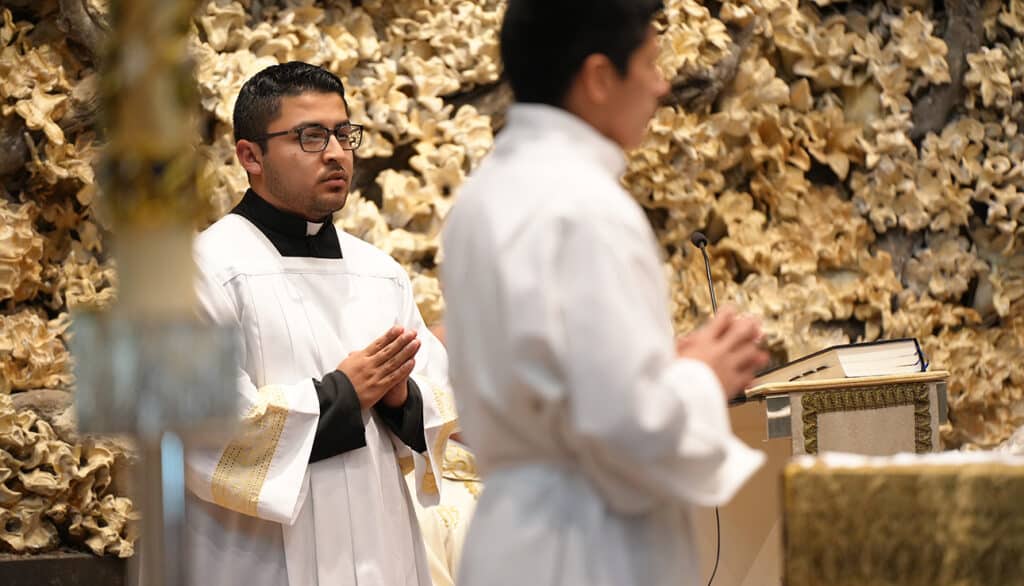
Five ways to increase the number of seminarians and priests

1. Involve the entire community, movements and parishes.

On the feast day of the Sacred Heart of Jesus, the Church celebrates the World Day of Prayer for the Sanctity of Priests and seminarians. In 2019, on the occasion of this day, Pope Francis invited all Catholics through his prayer network to pray for priests and students studying in seminaries "so that, with the sobriety and humility of their lives, they may engage in active solidarity, above all, towards the poorest."

In the CARF Foundation this year we are launching this small campaign encouraging to pray for the holiness of all priests.

2. Young priests as models for seminarians.

A vocations ministry that serves as a fertile ground for new vocations begins with much prayer, especially in the adoration of the Blessed Sacrament with holy hours in the parishes, with the younger priests involved in youth ministry. In this way, by intensifying their interior life and their love for Jesus-Eucharist, and with priests as a model, many could consider the call to the priesthood. 

3. A father figure for future seminarians and priests.

Pope Francis assures us that "the paternity of the pastoral vocation consists in giving life, making life grow; not overlooking the life of a community". St. Joseph is a good model for both seminarians and their formators on the road to becoming a priest. With his total dedication, Jesus is the manifestation of the Father's tenderness. Therefore, "Jesus grew in wisdom and stature, and in favor with God and man" (Lk 2:52).

The Pope tells us that every priest or bishop should be able to say like St. Paul: "[...] through the Gospel, it is I who have begotten you for Christ Jesus" (1 Cor 4:15). St. Paul was very concerned about the formation of priests. In his first letter to the Corinthians he expresses vehemently: "Do you want me to come to you with a stick or with love and a spirit of gentleness? The formators and priests who accompany seminarians must be as a good father, who listens, accompanies, welcomes and corrects with gentleness, but with firmness. 
4. The Christian family as a seedbed of vocations.

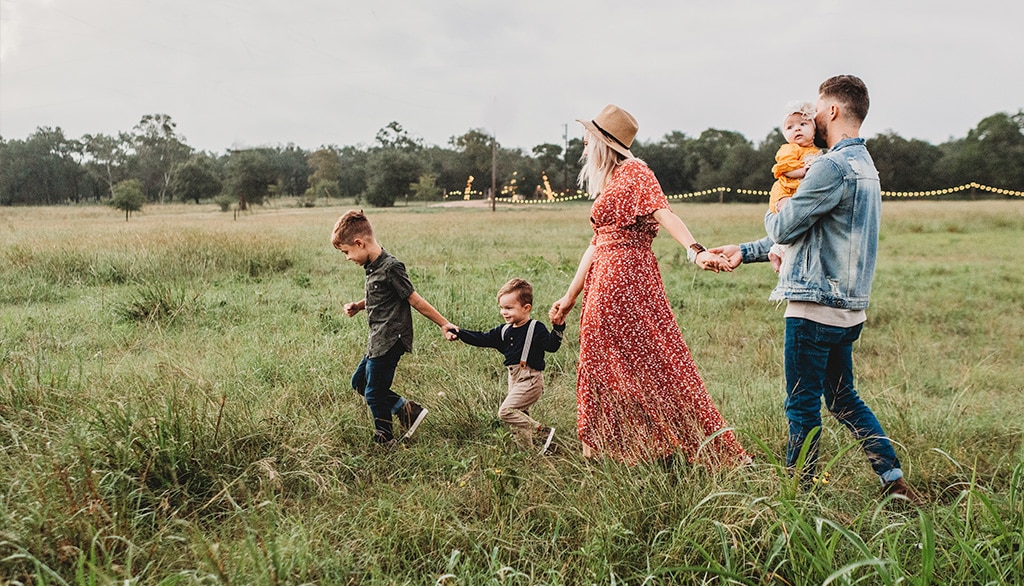
The family is the first agent of pastoral care for vocations (in all areas of the Church). The Christian family has always been humus and "educational mediation" for the birth and development of vocations, whether celibate, priestly or religious. 

A family pastoral care that integrates the vocational dimension must also form parents in dialogue with their sons and daughters about their faith and the way they understand the following of Jesus. But above all, vocations are forged by the example of parents in their love for God and for each other.
5. Support the formation of seminarians.

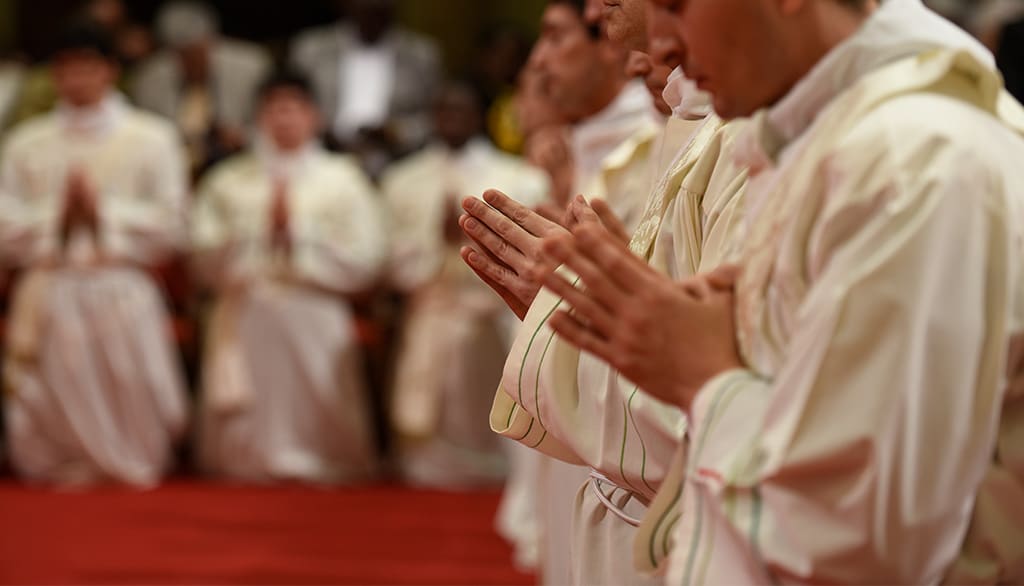
Pope Francis mentions four pillars to support the formation of every seminarian: spiritual life, prayer, community life and apostolic life. He also delves into the spiritual dimension of seminarians, placing special emphasis on the "formation of the heart".

Having well-trained priests has a positive impact on the high cost for dioceses. Upon entering the seminary, an aspirant to the priesthood has ahead of him at least five years of ecclesiastical studies, equivalent to a bachelor's degree and a specialization. This is followed by two years or more of doctoral studies in which the completion of a research thesis is contemplated. 

Many dioceses, especially in poor countries, lack either the resources to support their seminarians, or priests with sufficient formation to be seminary formators and provide candidates with adequate accompaniment. This is where the CARF Foundation and your help. With your donation you contribute to the formation and maintenance of diocesan priests and seminarians for their studies in Rome and Pamplona with the commitment to return to their diocese of origin.

A "profession" with a future.

Benedict XVI, on the occasion of the celebration of the Year for Priests 2010, began a letter with an anecdote from his youth. When, in December 1944, the young Joseph Ratzinger was called up for military service, the company commander asked everyone what he wanted to be in the future. He replied that he wanted to be a Catholic priest. The second lieutenant replied: "You will have to choose something else. In the new Germany there is no longer any need for priests".

"I knew," says the Holy Father, "that this 'new Germany' was coming to an end, and that after the enormous devastation that that madness had brought to the country, priests would be more necessary than ever. Benedict XVI adds that "even now there are many people who, in one way or another, think that the Catholic priesthood is not a 'profession' with a future, but rather belongs to the past". Despite this current sentiment, the reality is that the priesthood has a future because, as the Pope himself says at the beginning of his letter to seminarians, "even in the age of the technological domination of the world and of globalization, people will continue to need God, the God manifested in Jesus Christ and who gathers us together in the universal Church, to learn with him and through him the true life, and to have present and operative the criteria of a true humanity".


Bibliography:

Pope Francis, Apostolic Letter Patris corde

European Congress on Vocations, Working Paper.

Pope Francis, Message for the 57th World Day of Prayer for Vocations.

Benedict XVI, Letter on the occasion of the celebration of the Year for Priests 2010.
How to overcome pain through faith?

Bereavement: The experience of overcoming loss

Although human beings experience grief as one of life's most common experiences, we are always unprepared for it and it continually requires us to learn and adapt to new circumstances. Grief is not just about death. Grief is an emotion or various emotions that human beings experience when they experience a loss of any kind.

There are no "experts" in the pain of loss; it always has a dimension of originality: in the way it manifests itself, in its causes, and in the various reactions it triggers. Many times we find ourselves suffering deeply for reasons we never expected.

The Holy Father John Paul IIIn his letter, he writes: "Human suffering arouses compassion; it also arouses respect, and in its own way, it is frightening. Indeed, in it is contained the greatness of a specific mystery [...] man, in his suffering, is an intangible mystery."

This human experience moves us to seek the help of others and to offer, in turn, our support. The experience of overcoming griefteaches us to pay more attention to others who suffer. The experience of pain makes the difference between a mature person, who is capable of facing obstacles and difficult situations, and a person who is carried away and absorbed by his or her own

Christian faith as a support to overcome grief

Faith is the best refuge for those who have to go through the process of overcoming the grief of a loss of any kind and particularity. Faith gives us the strength, calmness and serenity necessary to lighten the pain of grief.

Overcoming a loss with serenity

"The resurrection of Jesus not only gives the certainty of life beyond death, but also illuminates the very mystery of death for each of us. If we live united to Jesus, faithful to Him, we will be able to face even the passage of death with hope and serenity." (Pope Francis, General Audience November 27, 2013).

Overcoming loss with hope

will come inexorably. Therefore, what a hollow vanity to center one's existence in this life! Look how so many suffer. Some, because it ends, find it painful to leave it; others, because it lasts, find it boring... There is no room, in any case, for the erroneous sense of justifying our passage on earth as an end.
We must leave this logic behind and anchor ourselves in the other: in the eternal logic. A total change is needed: an emptying of oneself, of self-centered motives, which are outdated, in order to be reborn in Christ, who is eternal. (Furrow, 879)

Overcoming a loss without fear of death

Do not be afraid of death. -Accept it, from now on, generously..., when God wills..., as God wills..., wherever God wills. -Do not doubt it: it will come at the time, in the place and in the way that suits you best..., sent by your Father-God. -Welcome to our sister death! (Road, 739).

Overcoming a loss with an eye to Heaven

Supernatural vision! Calm! Peace! Look at things, people and events..., with eyes of eternity.
So, any wall that blocks your way - even if, humanly speaking, it is imposing - as soon as you really raise your eyes to Heaven, what a small thing it is!Forge, 996).

Pain and love

By choosing the Incarnation, Jesus Christ wanted to experience all the suffering humanly possible to teach us that love can overcome any kind of pain. It is possible to overcome grief by looking at the life of Jesus and following in his footsteps.

Pain is a meeting point between the joy of hope and the need for prayer. Christians accept pain with the hope of future joy. They are fully aware of their limits and rely on the help implored from God in prayer.

Suffering is only a part of the journey, a passing place; it is never the final station. Thus, prayer becomes an important moment where suffering finds its meaning and, with God's grace, becomes joy.

Prayer is a fundamental support in the process of coming to terms with and overcoming a loss. The purifying effect of prayer becomes a reality because, every time a person prays, he or she experiences the God's mercy and share their concerns and problems.

However, there are moments in this journey in which the experience of pain forges a man's life. It is no longer a question of accepting or rejecting pain, but of learning to consider suffering as part of our own existence and as part of God's plan for each of us.

When the pain of loss sets in

Grieving the loss of a loved one is natural and inevitable. However, overcoming it is not easy, and sometimes, for various reasons, there are those who remain stuck in this pain. For this reason, there are many Catholic Foundations that offer support, organize groups of accompaniment to return to life after the death of a loved one and overcome their loss.

Overcoming grief in peace with God

In order to cope with the pain of grief, one must be aware of the importance of the spiritual accompaniment in those difficult moments. There is no one-size-fits-all prescription; its particularities make each case unique and particular.

They say that "pain comes from the body and suffering from the soul", but it is necessary to help the companions to be serene and "at peace with God", since, in this way, "this serenity is transmitted". Something that, later on, will make mourning easier in some way.

When speaking of people in the process of overcoming grief, priests emphasize one word: hope. Hope helps them to reposition themselves in spiritual terms, to find their place again, even in religious practice, which they may have abandoned. They must be made to see that God did not send them the pain they are experiencing, but that he loves them.

For this reason, Pope Francis encourages, "do not stop talking to Our Lord and to his Mother, the Blessed Virgin. She always helps us.


Bibliography:

Catechism of the Catholic Church
OpusDei.org

Pope's Message for WYD23

After a one-year postponement due to the pandemic, this WYD will be held at two different times: first on the Solemnity of Christ the King, November 20 of this year, with celebrations in the particular Churches around the world, and then at the international level in Lisbon from August 1 to 6, 2023. Both celebrations have the same theme:

"Mary arose and departed without delay" (Lk 1:39).

This is the biblical quote chosen by Pope Francis as the motto for World Youth Day 2023. To be held for the first time in Lisbon next year. The theme, concludes the cycle of three messages that accompany young people on the road between WYD Panama 2019 and Lisbon 2023, all of them centered on the verb levantarse.

The chosen quotation, from the Gospel of St. Luke, opens the account of Mary's Visitation to her cousin Elizabeth. In the This year's message, the Holy Father invites young people to meditate together on the biblical scene in which, after the Annunciation, the young Virgin Mary rises and goes out to meet her cousin Elizabeth, carrying Christ within her.

The Virgin Mary of Nazareth is the great figure of the Christian way. His example teaches us to say yes to God. It was the protagonist of the last edition of WYD in Panama and will also be the protagonist in Lisbon. To leave without delay sums up the attitude motivated by Pope Francis in his instructions for WYD Lisbon 2023: "May the evangelization of young people be active and missionary, and may they recognize and witness to the presence of the living Christ".

Addressing especially young people, challenging them to be courageous missionaries, the Pope writes in his Apostolic Exhortation Christus Vivit: "Where does Jesus send us? There are no frontiers, there are no limits: he sends us to everyone. The Gospel is not for some but for all" (CV 177).

El-mensaje-del-Papa-Francisco-para-la-JMJ-de-Lisboa-2023-Carf

The Mother of the Lord, model for young people on the move

"Mary, she got up and got going, because she was sure that God's plans were the best possible project for her life. Mary became the temple of God, the image of the Church on the way, the Church that goes out and puts herself at the service, the Church bearer of the Good News.

The resurrection stories often use two verbs: to awaken and to arise. With them, the Lord urges us to come out into the light, to let ourselves be led by him to cross the threshold of all our closed doors. It is a significant image for the Church.

The Mother of the Lord is a model for young people on the moveShe was not motionless in front of the mirror contemplating her own image or 'caught' in the nets. She was totally oriented outward. She is the paschal woman, in a permanent state of exodus, of going out of herself towards the great Other who is God and towards the others, the brothers and sisters, especially the most needy, as was her cousin Elizabeth".

"I hope, and firmly believe, that the experience that many of you will live in Lisbon in August next year will represent a new beginning for you, young people, and - with you - for all of humanity." Pope Francis.

Mary departed without delay

And the Pope tells us "Of course, you cannot solve all the problems of the world. But perhaps you can start with those closest to you, with the problems in your own area. Mother Teresa was once told, "What you are doing is just a drop in the ocean. And she replied, "But if I didn't do it, the ocean would have one drop less".

"Faced with a concrete and urgent need, we must act quickly. How many people in the world are waiting for a visit from someone to care for them! How many elderly people, how many sick people, prisoners, refugees need our compassionate gaze, our visit, a brother or sister to break down the barriers of indifference!"

Dear young people, what is the "rush" that moves you?

Haste is 'good' says Pope Francis at World Youth Day," good haste always pushes us upward and toward others." Starting from the reflection on haste that characterizes the Virgin of Nazareth, the Holy Father encourages young people to ask themselves what attitudes and motivations they experience in the face of the challenges of daily life. He invites them to make a discernment between a "good haste [that] always pushes us upwards and towards others" and a "not good one (...) that leads us to live superficially, to take everything lightly, without commitment or attention, without really participating in the things we do."

"It has happened to many of us that, unexpectedly, Jesus came out to meet us: for the first time, we experienced in Him a closeness, a respect, an absence of prejudice and condemnation, a look of mercy that we had never encountered in others. Not only that, we also felt that it was not enough for Jesus to look at us from afar, but that He wanted to be with us, He wanted to share His life with us."

"The joy of this experience awakened in us a rush to welcome Him, an urgency to be with Him and to know Him better. Elizabeth and Zechariah welcomed Mary and Jesus. Let us learn from these two elders the meaning of hospitality! Ask your parents and grandparents, and also the older members of your communities, what it means for them to be hospitable to God and to others. It will do them good to listen to the experience of those who have gone before them."

You are the hope of a new unity

"Dear young people, I hope that at WYD you will once again experience the joy of encountering God and your brothers and sisters. After long periods of distance and isolation, in Lisbon - with God's help - you will experience the joy of meeting God and your brothers and sisters. we will rediscover together the joy of the fraternal embrace between peoples and between generations, the embrace of reconciliation. The embrace of a new missionary fraternity! May the Holy Spirit kindle in your hearts the desire to rise up and the joy of walking all together, in synodal style, abandoning false frontiers. The time to rise up is now! Let us rise up without delay!"

In the remaining stretch before reaching Lisbon, we will walk next to the Virgin of Nazareth. who, immediately after the annunciation, "arose and departed without delay" (Lk 1:39) to go and help her cousin Elizabeth."

The wonder of being Church

3. Finally, the Bishop of Rome points out that the whole of these passages awakens (or should awaken) in us "the wonder of being Church; of belonging to this family, to this community of believers that forms one body with Christ, since our baptism. It is there that we have received the two roots of wonder as we have seen: first to be blessed in Christ and second to go with Christ into the world".

And Francis explains that "it is an astonishment that does not diminish with age or decline with responsibility. (we could say: with the tasks, gifts, ministries and charisms that each of us can receive in the Church, at the service of the Church and the world).

At this point, Francis evokes the figure of the saintly Pope Paul VI and his programmatic encyclical Ecclesiam suamwritten during the Second Vatican Council. Pope Montini says there: "This is the hour in which the Church must deepen her awareness of herself, [...] of her own origin, [...] of her own mission.". And referring precisely to the Letter to the Ephesians, he places this mission in the perspective of the plan of salvation; of "the dispensation of the mystery hidden for ages in God... that it might be made known... through the Church" (Eph 3:9-10).

Francisco He uses St. Paul VI as a model to present the profile of what a minister in the Church should be like.He who knows how to marvel at God's plan and passionately loves the Church in that spirit, ready to serve his mission wherever and however the Holy Spirit wills. Such was, before St. Paul VI, the Apostle to the Gentiles: with that spirit, with that ability to be astonished, to be passionate and to serve. And that should also be the measure or thermometer of our spiritual life.

For this reason, the Pope concludes by once again addressing to the Cardinals some questions that are useful to all of us; for we all - faithful and ministers in the Church - participate, in very different and complementary ways, in that great and unique 'ministry of salvation' which is the mission of the Church in the world: "How is your ability to be amazed? Or have you gotten used to it, so used to it, that you've lost it? Are you capable of being amazed again?" He warns that it is not a simple human capacity, but above all a grace of God that we must ask for and be grateful for, guard and make fruitful, like Mary and with her intercession.


Bibliography:

OpusDei.org

The Bidasoa International Seminar and the CARF Foundation

How do Bidasoa and the CARF Foundation cooperate?

The relationship that exists between the Bidasoa International Seminary and the CARF Foundation is an example of cooperation and social commitment. Most of the seminarians are able to continue their studies thanks to the generous support of the benefactors of the CARF Foundation, who collaborate financially, according to their possibilities, for that no vocation be lost.

The Bidasoa International Seminar

It is an international seminary attached to the Faculty of Theology of the University of Navarra. It was erected by the Holy See in 1988 and has its seat in Pamplona, in the Navarre town of Cizur MenorThe property is located very close to the university campus.

The formation plan of the Bidasoa International Seminary is inspired by the documents of the Second Vatican Council, in particular Optatam totius y Presbyterorum ordinisthe Apostolic Exhortation Pastores dabo vobis and the Ratio Fundamentalis Institutionis Sacerdotalis of the Congregation for the Clergy.

Priests according to the heart of Christ

The purpose of the Bidasoa International Seminary is the vocational accompaniment of future priests and, therefore, "the discernment of vocation, the help to correspond to the call and the preparation to receive the sacrament of Priestly Order with its own graces and responsibilities". Pastores dabo vobis, 61.

seminario internacional bidasoa

Human, spiritual, pastoral and intellectual formation

At the Bidasoa International Seminary it is essential to enable seminarians to encounter Christ. The work of formation is oriented to the seminarian aspiring to be alter Christus in all aspects of his life, since he will participate through the sacrament of Priestly Orders, "of the same and unique priesthood and ministry of Christ". Presbyterorum Ordinis, 7. Aspirants to the priesthood must be convinced of the need to acquire a mature, balanced and sufficiently consolidated human personality that will make the gift received shine before others and enable them to persevere in following the Master, even in times of difficulty.

The pastoral formation received by the candidates of the Bidasoa International Seminary, by the spiritual director and the formators, is oriented to develop, in each one, the priestly soul; a heart of father and shepherd, soaked by the same feelings of Christ. 

This priestly formation is complemented by the scientific and teaching work carried out at the University of Navarra, where we seek to form by awakening a love for the truth. Especially in the seminarians who find themselves in the Bidasoa International Seminary, emphasis is placed on the importance of study, which prepares them for the future development of priestly ministry in today's world.

Seminarians protagonists of their formative process

During the 35 years of the Bidasoa International Seminary, the same years of existence as the CARF Foundation, almost a thousand seminarians from many countries have matured their priestly vocation accompanied by the formators of this seminary.

Based on the conviction of the importance of personal freedom as an indispensable means to achieve the necessary human, spiritual, intellectual and missionary maturity, they have tried to transmit to each seminarian that each one must be the protagonist of his formative process, knowing that responsible freedom is rooted in an atmosphere of trust, friendship, openness and joy.

This prominence is made possible by the fact that the seminarians, some of whom come from very distant parts of Spain, joyfully share the same formative experience of study, classes, prayer times, pastoral activities, get-togethers and excursions.

Seminarians in union with the bishop of their diocese

The international character constitutes a rich human and ecclesial experience, which helps to increase in each seminarian a catholic, universal and apostolic spirit. Likewise, the Bidasoa International Seminary fosters the union of each seminarian with his bishop and with the priests of his diocesan presbyterate.

Why the CARF Foundation is one of the main benefactors of the Bidasoa International Seminar 

The seminarians of the Bidasoa International Seminary come from different parts of the world. They are sent by their respective bishops in order to receive an adequate formation for their future priestly work in their dioceses. 

It is the bishops who request the scholarships from the University of Navarra, which in turn requests the help of the CARF Foundation. The objective of the foundation is to provide these young people with a solid theological, human and spiritual preparation in the Ecclesiastical Faculties of the University of Navarra and the Pontifical University of the Holy Cross (Rome). Every year, more than 5,000 benefactors make this possible.

In addition to the formation in the Ecclesiastical Universities, the seminarians need an environment of trust and freedom, a fraternal and familiar atmosphere that facilitates the clear and sincere opening of the heart and the integral formation; they find this environment in the Bidasoa International Seminary.

Throughout the 2022/23 academic year, the CARF Foundation allocated 2,106,689 euros in housing and tuition grants.

Annual meeting between benefactors of the CARF Foundation and seminarians of the Bidasoa International Seminary.

Every year, the CARF Foundation, in collaboration with the Bidasoa International Seminary, organizes a meeting between seminarians and benefactors. An intimate day, in which both parties, benefactor and beneficiary, have the opportunity to get to know each other, experience the Eucharist together and enjoy a lunch and a visit to the seminary and a musical festival that the students prepare as a way of thanking those who make it possible for them to be formed in Bidasoa.

The day ends with a long awaited moment, as those responsible for the Social Action Patronage (PAS) of the CARF Foundation, deliver the cases (backpacks) of sacred vessels to the seminarians who are in their last year. They include all the liturgical objects necessary to celebrate Mass in remote towns or villages where they barely have what they need, including a custom-made alb for each of the future priests.

Finally, adoration before the Blessed Sacrament is shared; and a visit to the wayside shrine of the Mother of Fair Love, located on the campus of the University of Navarra.

"I am very grateful to study at Bidasoa because I can see firsthand the face of the Universal Church. This is because we seminarians at Bidasoa come from more than 15 countries. Another thing that we are indirectly taught at the Bidasoa International Seminary is the attention to the little things, especially in the preparation of liturgical celebrations. This is done not because we want to be perfectionists, but because we love God and want to try to do and present the best of ourselves to God through the little things."

Binsar, 21, from Indonesia.

Young people and real life

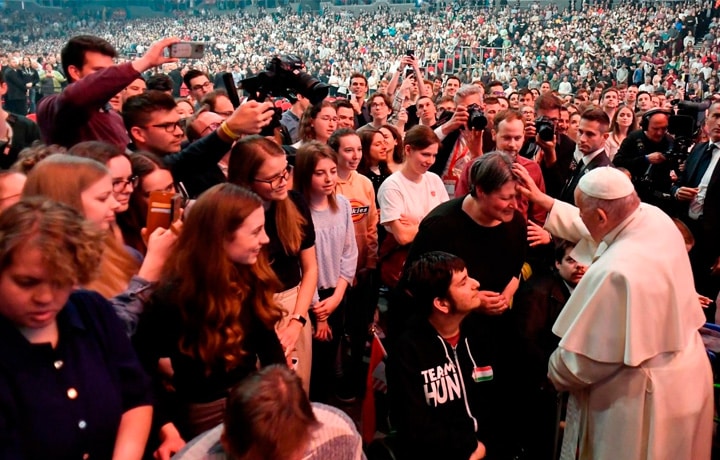
With the young people of Hungary, almost in a preview of the WYD Lisbon, the Pope was clear and enthusiastic (cf. Speech at the Papp László Budapest Sportaréna, 29-IV-2023). He did not fail to speak to them about their roots (condition of life) and, above all, about Christ. Pope Francis told the young people of Hungary that ready-made answers are useless. That "Christ is God in flesh and bloodHe is the living God who comes close to us; He is the Friend, the best of friends; He is the Brother, the best of brothers; and He is very good at asking questions. In the Gospel, in fact, He, who is the Teacher, asks questions before giving answers".

papa francisco a los jóvenes

To those who desire great things, young and not so young, he teaches that "one does not become great by passing over others, but by lowering oneself to others; not at the expense of others, but by serving others (cf. Mk 10:35-45)".

Pope Francis to the youth

Jesus teaches us to riskto aim high; but also to train. A teaming up without closing in in a group of friends and on a cell phone. Pope Francis also wanted to tell young people: "Do not be afraid to go against the current, to find a time of silence every day to stop and pray". Although today everything seems to push us to be efficient like machines, we are not machines. At the same time, it is true that we often feel as if we are running out of gas, and for this reason we need to to collect ourselves in silence.

For the Pope, "Silence is the ground on which we can cultivating profitable relationshipsbecause it allows us to confide to Jesus what we are living, to bring Him faces and names, to place our anxieties in Him, to think of our friends and to pray for them".

Documental papa Francisco Amén

In addition, "silence gives us the possibility of read a page of the Gospel that speaks to our lifeWe are also the place to adore God, thus finding peace in our hearts".

But Pope Francis adds to the young people that perhaps "silence allows you to choose a book that you are not obliged to read, but which helps you to read the human heart; a observing nature not to be only in contact with man-made things and thus discover the beauty that surrounds us".

But, beware, the Pope remarks very strongly to all young people: "Silence is not for staying glued to your cell phone and social networks. No, please don't. Life is real, not virtualLife doesn't happen on a screen, life happens in the world! Please do not virtualize life. I repeat: do not virtualize lifeThat's concrete. Got it?"

It is this a call of Pope Francis to realismrealism that needs, as we can see, silence; because "...".Silence is the door to prayer, and prayer is the door to love.". In prayer, Francis advises, "do not be afraid to bring to Jesus everything that happens in your inner world: affections, fears, problems, expectations, memories, hopes, everything, even sins. He understands everything. Prayer is a dialogue of life, prayer is life".

To love and serve

Realism and life. The danger today, warns Pope Francis to young people, is to be ".fake peoplewho trust too much in their own abilities and at the same time live by appearances in order to look good; they distance God from their hearts because they are only concerned with themselves. On the other hand, as we see in the Gospels, the Lord does great things with us if we are authentic, if we recognize our limitations and go forward fighting against our sins and defects.

What does Pope Francis ask of today's youth?

And to conclude, Pope Francis encourages young people to ask themselves: "What do I do for others?What do I do for society, what do I do for the Church, what do I do for my enemies, do I live for my own good or for the good of others, do I live for the good of others? I take a risk for someone(...) Let us ask ourselves about our gratuitousness, about our capacity to love, to love according to Jesus, that is, to love and serve. Like the young man in the Gospel who trusts Jesus. Y gives what little he had for lunch. And then Jesus performs that miracle of the multiplication of food (cf. Jn 6:9)".


Ramiro Pelliterocourtesy of the blog Church and new evangelization, 21-V-2023.

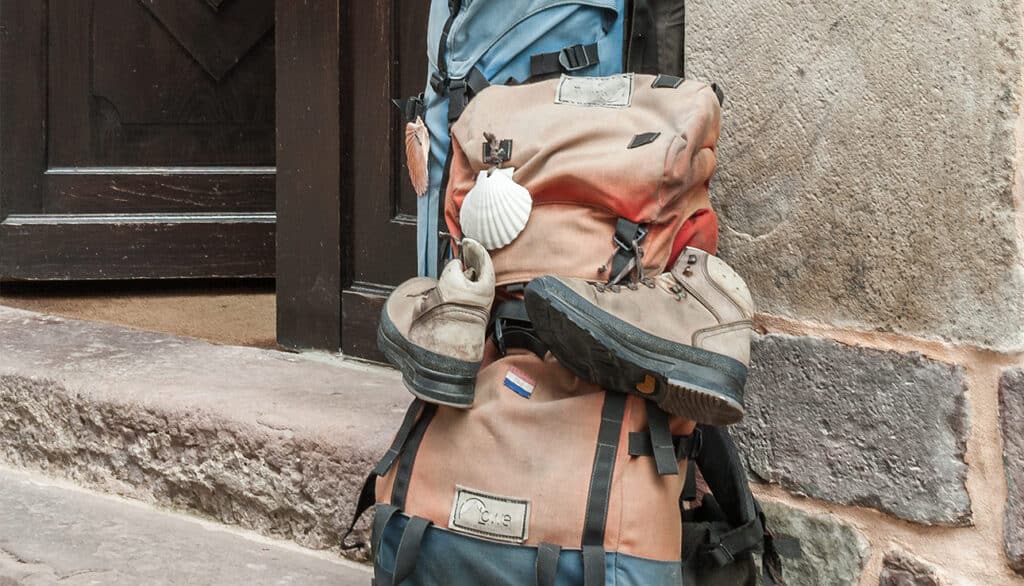
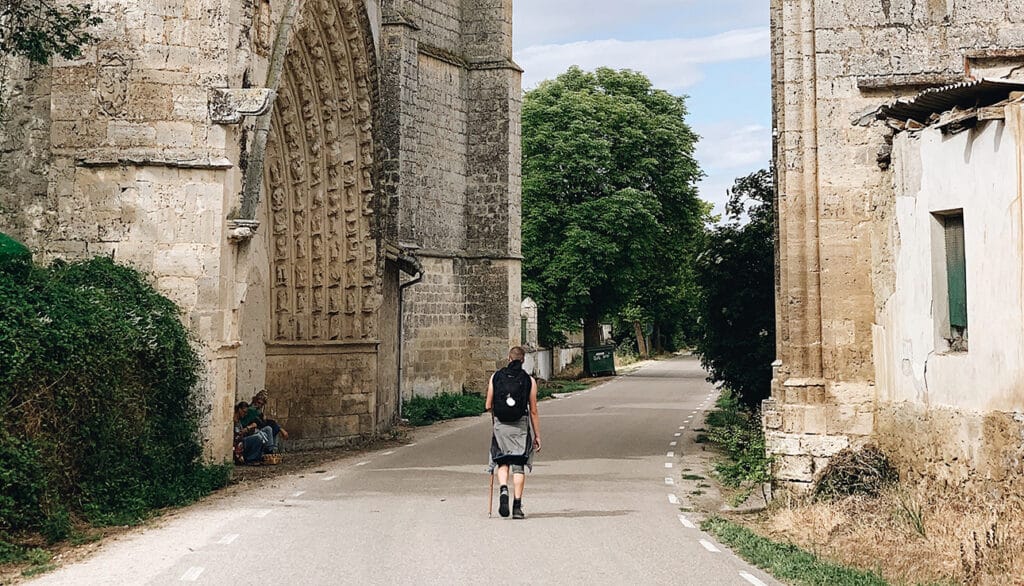
An unexpected encounter on the Camino de Santiago

"I had long wanted to do the Camino de Santiago with Cristina, my wife, when another couple, an expert in hiking, told us that at the end of May they wanted to do the so-called English Way, which goes from Ferrol to Santiago. It is a little more than a hundred kilometers, and they had already planned the route, the lodgings and the help with the luggage, with a company that by cab picks up the suitcases in your hotel and deposits them in the next one.

For my age, recently retired, it was a very interesting option, because I avoided carrying a lot of weight in my backpack, which is a relief when you walk so many kilometers. In addition, if at some point your strength weakens, or you have some impediment that does not let you walk, they can come to pick you up and take you to the next meeting point.

With these premises, we did not hesitate to embark on the adventure, and we booked our plane tickets to A Coruña and back from Santiago to Barcelona, where we live.

The days of the Road to SantiagoThe first one, about 19 kilometers, from El Ferrol to Pontedeume. The first, about 19 kilometers, from El Ferrol to Pontedeume; and the next, another 20 kilometers, to Betanzos. In both towns we were able to participate in the Mass, which is usually celebrated in the afternoon.

In the third stage, things started to get complicated, because from Betanzos to Mesón do Vento was a journey of more than 25 kilometers with a great slope. Arriving at the destination, we had no church where we could attend Mass, so we arranged a cab to take us back to Betanzos to participate in the one celebrated at half past seven, and then return us back to Mesón do Vento. Now somewhat more rested, we were able to have a good dinner and regain strength because, the next day, we also had a long way to walk.

Way of the Apostle Santiago

camino de santiago

Already looking forward to the penultimate route, we left the next day to Sigüeiro, another 25 kilometers with its good slopes of ups and downs, but somewhat more bearable than the previous section and with landscapes of eucalyptus forests and fields about to mow.

The truth is that we arrived in Sigüeiro exhausted but happy. Cristina ended up with a sore foot and we decided that the last stretch to Santiago, just 16 kilometers, she would be taken by cab to a kilometer before and there she would join us who were walking the last part of the route. We arranged to meet at the Church of San Cayetano, which is at that distance from the center and which crosses the route of the English Way of St. James.

A little before noon we met at the parish of San Cayetano. It was already closing and the parish priest did not have time to stamp the parish seal on our already well-filled Compostela, but we greeted the Lord and thanked him for all the good Camino we had had. The truth is that it did not rain a single day and the heat, although it was hot, did not prevent us from completing the stages happily.

Right at the door of the parish, two young Kenyan men were leaning against the stone wall, as they told us, and we asked them to take a picture of the whole group. They spoke Spanish and their kind disposition made us engage in a quick conversation.

- Hello, good morning, what do you do?

- We are helping the pastor, since we are seminarians.

- Look, how nice! Well, we collaborate with a foundation that helps the studies of seminarians, which is called CARF Foundation.

- What do you say! Well, we are studying in Bidasoa. So, thank you very much for your help and collaboration.

The joy and surprise was great, and from that moment on, an enormous empathy was generated. Serapion (Serapion Modest Shukuru) and Faustin (Faustin Menas Nyamweru), both from Tanzania, accompanied us on the last stretch.

Then Serapion told us that he is already in his fourth year and Faustin in his first year. They showed us the Pilgrim's office, where they just put the last seal and certify your Camino, which also certifies the possibility of gaining the plenary indulgence that this pilgrimage implies, as long as the rest of the conditions of the Church are fulfilled.

Bidasoa on the Way of St. James

Once again moved, we bid farewell to both of them, wishing them to be very faithful and to do much good when they arrive in their place of origin to be ordained priests, after their period of formation at the Bidasoa Seminar.

We are left with the wonderful memory of this chance encounter, and of having received the gratitude of these two seminarians who, with the help of all the benefactors of the CARF Foundation, can reach many souls wherever they carry out their ministerial work.

In the afternoon, we were able to participate in the Mass in the cathedral, giving thanks to the apostle and enjoying the swaying of the botafumeiro that raised to heaven with the smell of incense, all our intentions and gratitude for the vocation of Serapion and Faustin".


Fernando de Salas, Sant Cugat del Vallés.