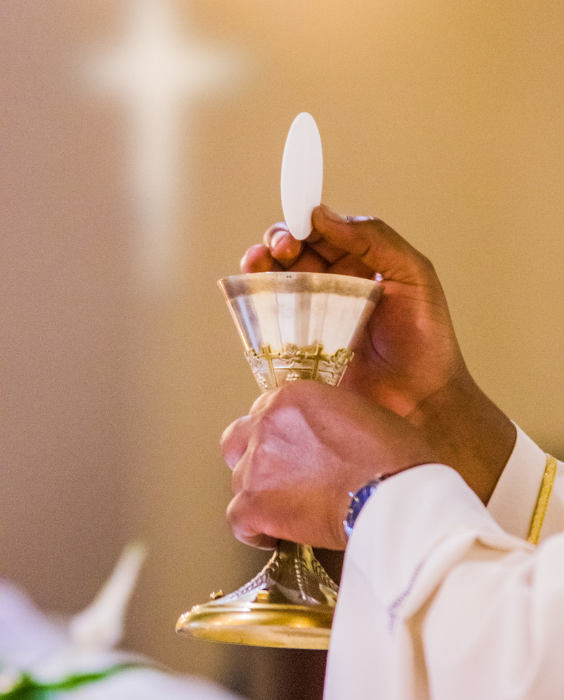
The 5 leadership lessons of John Paul II

Andreas' loneliness on Christmas Eve

On Christmas Eve 1986, Andreas Widmer made his first service as a Swiss Guard in the service of Pope John Paul II, his boss.

The first meeting between the two took place as St. John Paul II was walking out the door of his papal apartment and on his way to celebrate midnight mass. Who would have thought the young Widmer that Karol Wojtyla would at that first moment make an indelible impression on him!

It was the pontiff's great ability to be in what he was doing that made him aware of the personal circumstances the young, novice Swiss guard was going through. Circumstances that caused him uneasiness, until St. John Paul II initiated the conversation.

Widmer was young, longing for his family at the height of the Christmas and was feeling a bit depressed and lacking in confidence. He had not discussed this feeling with anyone.

John Paul II approached him and said: "It is clear that this is your first Christmas away from home! I appreciate very much the sacrifice you are making for the Church. I will pray for you tonight at Mass." None of his colleagues and friends had noticed his anguish that night.

It had to be the leader of 1.2 billion Catholics who took notice, and gave him a lesson in the leadership of one who is willing to serve.
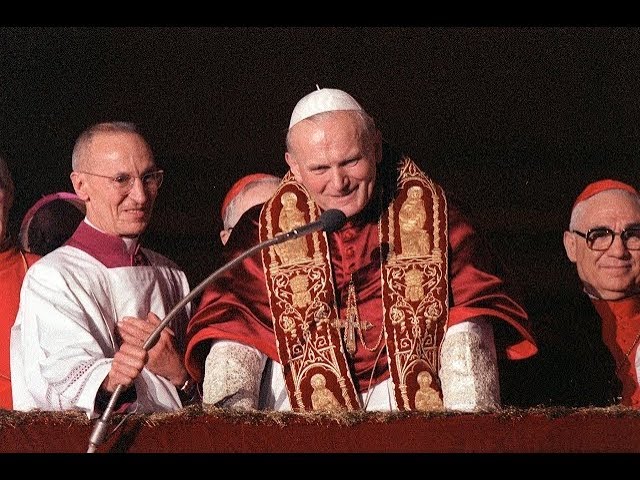
juan pablo II liderazgo

Encouraged people to think big

And to keep his eyes raised and set in the distance. "John Paul always had the perspective of my whole life when he spoke to me. I am convinced that this is a natural consequence of his long years of dedication to the university as chaplain.

On one occasion he stopped to talk to me. He wanted to know how I was doing and whether I liked being a Swiss guard very much or not. I told him about my occupations and concerns, all of which were focused on the short term.

He helped me move from a short-term vision to a long-term vision for the rest of my life. According to Widmer the pontiff always pushed him to reach for higher goals and not to stay ensconced in mediocrity. "He pushed me to think big."

St. John Paul II was totally involved in every conversation.

"Every time I talked to Juan Pablo, Even when I just stopped by to say hello, he made me feel like I was the reason he got up that morning."

Let's go back to Widmer's first meeting with his new boss on that Christmas Eve. Widmer admits that he felt sad and determined to leave the service. He thought at the time that he had made a tremendous mistake by signing up for the Swiss Guard Corps.

When the pope left his apartment, he could have simply walked past. "But he didn't just walk by. He stopped and realized that I was troubled and the real reason for my circumstances. He had the fine ability to notice things at the precise moment, to pick up on the true feeling of the people he came across."

John Paul made people feel special because he was present. This is a common trait in a leader who inspires people.

"People who tell me that they work for leaders who inspire them almost always comment that their boss makes them feel like they are the most important person at that moment in that room and that their boss genuinely cares about their well-being."

He showed people that he believed in them

"Juan Pablo had more faith in me than I had in myself," Widmer said. "That boosted my self-esteem and allowed me to achieve more than I would have thought possible. He believed in me before I believed in myself."

Leaders who inspire believe in people, often even more than they believe in themselves and more strongly. We have the example of millions of young people around the world whose self-esteem grew because John Paul II inspired them by believing in their potential and left them with the message "Do not be afraid."
san juan pablo II liderazgo andreas

He saw work as an opportunity and not a burden.

According to Widmer, "John Paul II spoke of work not as a burden but as an opportunity to become what we are called to be. He firmly believed that it is the work what makes us truly human.

John Paul believed that when we work we not only "make more"; in his encyclical letter Laborem Exercens the pope wrote: "Work is a fundamental dimension of Man's existence on earth".

Celebrated and encouraged entrepreneurship

John Paul II celebrated the phenomenon of entrepreneurship because creating something from nothing is a fundamental aspect of all spirituality.

"Just as those who believe have Faith in their Creator, so too must the entrepreneur have Faith in their vision, Faith in the team's ability to execute the vision, and Faith that what they set out to bring to fruition is intensely connected to something greater than themselves."

John Paul II convinced Widmer that entrepreneurship was a great path on which to build his life, a path on which he could utilize his giftsThe goal is to develop their talents, talents and ideas to their full potential and thus participate in the work of creation.
Three 3 foundations that support the Catholic Church and its relevance 1

Learn about the importance of foundations that help the Catholic Church and how the CARF Foundation contributes by promoting education and priestly formation. Learn why it is crucial to support these initiatives.

The importance of foundations in support of the Catholic Church

Catholic Church aid organizations and foundations not only support Christian formation, but also contribute to various charitable works, extending their impact to needy areas around the world.

Through funding educational, pastoral and infrastructure projects, these foundations ensure that the mission of the Catholic Church continues to flourish and reach out to all corners of the world, especially those most in need.

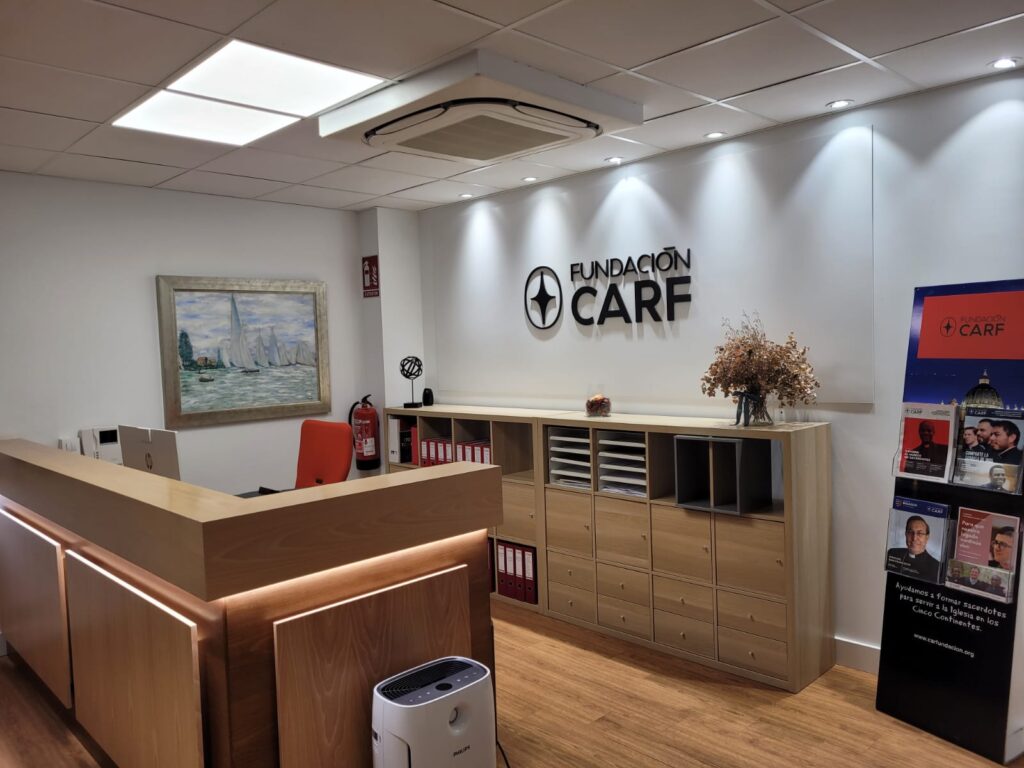
oficina fundación carf

To support the CARF Foundation is to promote priestly vocations around the world.

The CARF Foundationis a non-profit organization dedicated to promoting the integral formation of priests and seminarians throughout the world. Founded on February 14, 1989, it has established itself as a reference in the field of education for priests and religious and support for the Catholic Church around the world, especially in countries without resources.

The mission of the CARF Foundation is centered on the conviction that a solid and adequate formation of priests is fundamental for the social, spiritual and moral growth of society.

Through its financial aid programs, the CARF Foundation, thanks to its benefactors and friends, facilitates access to an education of excellence in prestigious institutions such as the University of California (U.S.A.) and the University of California (U.S.A.). Pontifical University of the Holy Cross in Rome and the University of Navarra in Spain. 

Supporting institutions like the CARF Foundation not only has a direct impact on the lives of seminarians and diocesan priests and religious men and women, but also impacts the dioceses around the world in which they serve.

The Pope Benedict XVI stressed the importance of the formation of priests in his encyclical Deus Caritas EstThe formation of priests is a task of great importance for the life of the Church. Priests must be true men of God, with a solid intellectual and spiritual formation". This commitment to an integral formation is precisely what the CARF Foundation strives to provide to its beneficiaries.

The CARF Foundation has achieved a significant global impact. With more than 35 years of experience, it has collaborated in the formation of more than 30,000 priests, seminarians and religious from 131 countries.

This support translates into thousands of people who have returned to their countries of origin and who highlight how the support of the CARF Foundation has allowed them to access training that would otherwise be unattainable, making it possible to bring this knowledge and dedication to their communities. This generates a positive multiplier effect.

Other foundations supporting the Catholic Church

There are also many other foundations that do commendable work in support of the Catholic Church. Foundations such as Aid to the Church in Need (ACN) and the Pontifical Mission Societies (PMS) also play a crucial role in evangelization and supporting vulnerable communities.

These organizations, like the CARF Foundation, rely on the generosity of individual donors to carry out their mission.

Supporting ACN means supporting persecuted Christians

Aid to the Church in Need (ACN) is an international pontifical charity dedicated to supporting persecuted Christians in need throughout the world.

ACN was founded in 1947 and its mission is to provide pastoral and humanitarian aid to Christian communities suffering persecution or economic hardship.

The organization works in more than 140 countries and supports the Catholic Church in a variety of areas, including:

ACN's work is vital to ensure that Christian communities can maintain their faith and hope, even in the most difficult circumstances.

Pope Francis has highlighted the importance of supporting persecuted Christians, stating: "Today there are more martyrs than in the first centuries. This is not an exaggeration. Today, more Christians are persecuted, tortured and killed because of their faith in Jesus.".

Pontifical Mission Societies is to support the evangelizing Church.

PMO is a global network of Catholic organizations that support the evangelizing mission of the Church throughout the world.

OMP was founded in 1822 and is dedicated to promoting mission awareness and raising funds to support missions in areas where the Church is still developing. Key areas of support include:

PMS works closely with local dioceses and religious congregations to ensure that resources reach where they are most needed, thus strengthening the Church's presence and mission around the world.

Saint Josemaría Escrivá de BalaguerThe founder of Opus Dei, emphasized the importance of evangelization and the role of religious education, saying: "It is in education, in teaching, that the men of tomorrow are forged.". This principle guides many foundations such as OMP in their missionary and educational work.

The crucial role of foundations in the support of the Church

Whether it is ACN, OMP or the CARF Foundation, they represent a fundamental pillar in the support and growth of the Catholic Church. These foundations not only provide the necessary resources for the formation of priests and infrastructure construction, but also offer spiritual and moral support to many dioceses facing real adversity.

By donating to these foundations, benefactors are directly supporting the Catholic Church and the promotion of the Catholic faith in every corner of the world.

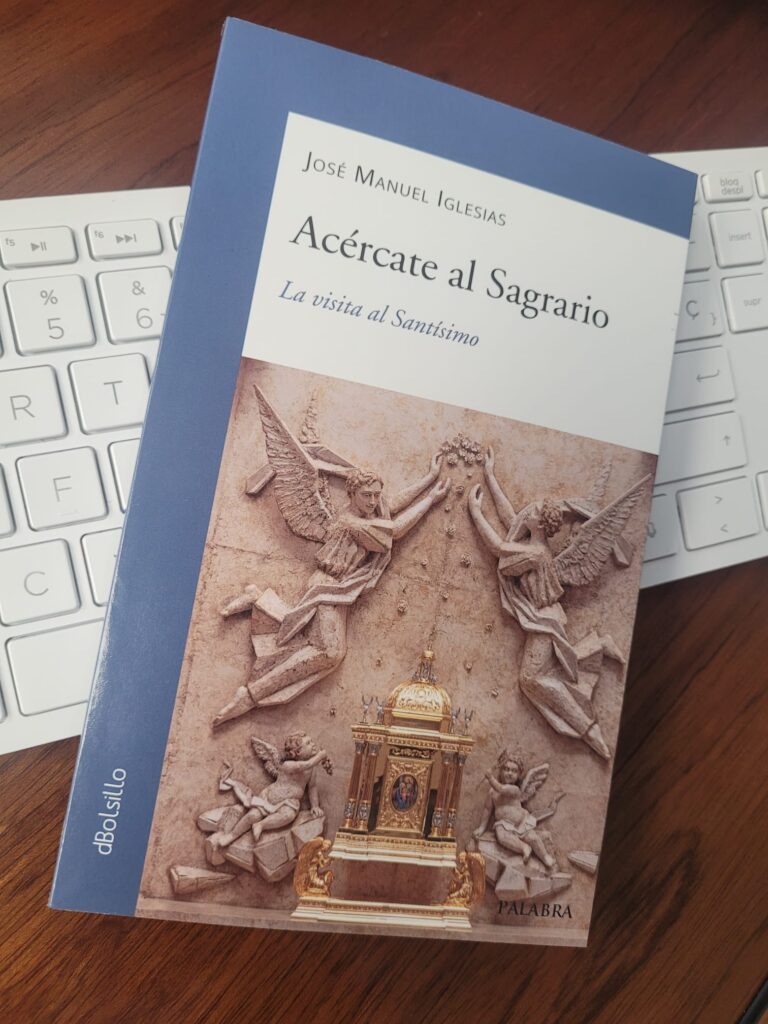
Approach the Tabernacle, by José Manuel Iglesias

"We must strive to discover the marvelous mystery of the innumerable Tabernacles - tabernacles - that form constellations of light visible only to the angels and believers covering the face of the earth".

Jesus is present in the tabernacle... He is offering himself as food.... The author of the book Acércate al Sagrario, don José Manuel Iglesias advises us that what "we have to do is to visit them and desire to receive Him.

There is nothing more effective than Eucharistic piety for walking the path of holiness!

There, in the tabernacle, He waits for us.... He waits for us to draw near and to meet Him, to identify with Him!

A theologian from Betanzos (Coruña) focused on the tabernacle

José Manuel is a priest and has a degree in Theology, from the first graduating class of the University of Navarra. He is also a member of the first graduating class of the Instituto de Enseñanza Media of his native Betanzos.

His priestly work takes place in many educational centers and parishes in the diocese of Santiago de Compostela. He also collaborates occasionally in some media. Among other titles, he has written the following books: La visita al Santísimo, Las comuniones espirituales, Una costumbre de siempre: la acción de gracias, Tratar a Jesús -Cartas de un párroco-, Vida eucarística.... As can be seen from these books, Fr. José Manuel likes to be centered in the Tabernacle.

This new book of only 143 pages is divided into four main chapters, not counting the introduction, conclusions and the preliminary chapter. They are simple, close and easy to read pages that first recognize that He wanted to stay with us hidden in the bread; a madness that is the refinement of Love for all men and women of all times. But to be grateful for this madness, we have to learn or improve our Eucharistic culture and our approach to the tabernacle, where He is always waiting for us.

As already advised St. Josemaría since the beginning of his preaching, we have to "assault" tabernacles, look for tabernacles, says Don José Manuel. And in today's cities the task becomes somewhat more complex, since the churches are less conspicuous than in other times and are confused with other buildings. This makes it difficult "to pass unnoticed before the Lord present in that tabernacle, perhaps solitary, or almost ignored, in so many churches, chapels, oratories...".

Learning the civility of piety before the tabernacle

The little book dBolsillo, from Editorial Palabra, invites us, with experiences close to us, to know how to be; to know how to enter a church or chapel; to show the utmost respect for God present in the tabernacle; to recognize Him through silence and prayer.

And to know Jesus we must make the effort to concentrate in order to treat him and to know ourselves. Although "sometimes it is enough for us to be there, nailed before the Tabernacle, to look at him, to keep him company". And as the farmer said "I look at Him and He looks at me, so we understand each other".

acercate-al-sagrario-jose-manuel-iglesias-
Cover of the book by José Manuel Iglesias: Acércate al Sagrario.

I think you are here

This chapter unpacks the value and power of spiritual communion when distance or any other impediment prevents us from approaching a tabernacle to receive from the hands of the Lord. priest Holy Communion. Don José Manuel invites us to make our whole day a continuous Mass. In this way," St. Josemaría taught, "closely united to Jesus in the Eucharist, we will achieve a continuous presence of God, in the midst of the ordinary occupations proper to each one's situation in this earthly pilgrimage, seeking our Lord at all times and in all things.

The book "Approach the Tabernacle" concludes with a very special chapter dedicated to "The Mrs. of the Tabernacle": the Mother of the Sacramental Lord who, being the first tabernacle in the history of humanity, now always accompanies her Son in all the Eucharists of the world.

To kindle our faith and our love for the Eucharistic Jesus, our Mother is the best and most admirable example.

St. Josemaría Escrivá, June 26, 2009

Life of St. Josemaría Escrivá

Family (1902 - 1914)

Josemaría Escrivá de Balaguer was born on January 9, 1902 in Barbastro, Huesca. His parents' names were José and Dolores. They instilled in him and his five brothers and sisters the Christian customs from a very early age. Confession, daily communion, the importance of prayer and charity. 

Vocation (1914 - 1918)

Later, the death of three younger sisters and the family's economic bankruptcy soon made him aware of mourning and grief. This experience made him mature and tempered his expansive and cheerful character. In 1915 the family moved to Logroño, where his father started a new job.

One winter, when there was a heavy snowfall in that city, Josemaría Escrivá de Balaguer, after seeing some of the footprints of bare feet in the snow of a Carmelite religiousHe sensed that God wanted something from him, although he did not know exactly what it was. Then, he asks himself: "If others make so many sacrifices for God and for their neighbor, will I not be able to offer him something?" Thus, a divine restlessness arises in his soul: "I began to sense Love, to realize that my heart was asking me for something great and that it was love". He thinks he will be able to discover it more easily if he becomes a priestHe began to prepare himself first in Logroño and later in the seminary of Zaragoza.

Ordination to the priesthood (1918 - 1925)

At the University of Saragossa he also studied law, following his father's advice. José Escrivá died in 1924, and Josemaría was left as head of the family. He was ordained to the priesthood on March 28, 1925, and began to minister first in a rural parish and then in Saragossa.

Founding of Opus Dei (1928 - 1936)

Josemaría Escrivá de Balaguer moved to Madrid in 1927 to obtain the doctorate in Law and exercise the pastoral ministry He was in daily contact with sickness and poverty in hospitals and in the poor neighborhoods of Madrid. On October 2, 1928, God made him see what He expected of him, and founded Opus Dei. From that day on, he has been working with all his strength in the development of the foundation that God has entrusted to him.

Spanish Civil War (1936 - 1939)

When the civil war broke out in 1936, Josemaría Escrivá de Balaguer was in Madrid, but he was not in the city of Madrid. religious persecution forces him to take refuge in different places. Exercises its clandestine priestly ministryuntil he managed to leave Madrid. After a journey through the Pyrenees to the south of France, he moved to Burgos.

Pastoral mission (1939 - 1945)

He returned to Madrid in 1939 at the end of the war and finished his doctoral studies in law. In the following years, Josemaría Escrivá continued the mission of Opus Dei and directed numerous retreats for lay people, priests and religious.

His life in Rome (1946 - 1965)

In 1946 he moved to Rome for good. There, he obtained the Doctorate in Theology from the Lateran University. He is appointed consultor to two Vatican congregations, honorary member of the Pontifical Academy of Theology and honorary prelate of His Holiness. He is very close to the pope during the preparations and the sessions of the Vatican Council II.

Expansion of the Work outside Spain (1970 - 1975)

To consolidate the apostolic mission of Opus Dei, he travels from Rome to different countries in Europe and Latin America. He also holds catechetical meetings with large groups of men and women.

Death

On June 26, 1975 Josemaría Escrivá de Balaguer died in Rome. Many bishops and lay people from different countries are asking the Holy See to open his cause of canonization.

Canonization of St. Josemaria Escriva de Balaguer

On May 17, 1992, John Paul II beatified Josemaría Escrivá. He proclaimed him a saint, ten years later, on October 6, 2002The Pope's funeral was held in St. Peter's Square, in Rome, before a large crowd. His remains are in the Church of St. Mary of Peace in Rome, where thousands of faithful come to pray and ask for his intercession.

The importance of St. Josemaría today

The importance of St. Josemaría Escrivá's message, his grace and his contributions to the Catholic Church are unquestionable. Of course, Opus Dei, and all that it has meant for the Church in the last century, remains in force.

But the transcendence of his message goes beyond the important work that Opus Dei carries out in the world.

St. Josemaría Escrivá, guided by the Holy Spirit, fought for the courageous message that all Christians, without exception, are called to holiness and to the greatest intimacy with Christ. And that they can attain it through daily prayer and contemplation, in the midst of their daily labors.

The saint of the ordinary

God is found everywhere: at work, in marriage, in the family, in society, in politics, in business, in study, among friends, etc. And in each and every one of these places and moments we have to be faithful witnesses of his love for others. St. Josemaría Escrivá invites us to discover in the little things of this world what is holy, good and divine.

To achieve this we have our work, willed by God for man, and which therefore collaborates in the redemption and sanctification of the human creature, as part of God's salvific plan. The salvation of man and the salvation of the world go hand in hand. The sanctification of the world, through work, is intertwined with the sanctification of the person.

The daily practice of this message, life in perpetual prayer, in every minute and every hour of study, of work, of apostolate in daily life, is a message that has exalted the faith and brought hundreds of thousands of souls closer to God, in a charism that God has given to his Church, and which has had its greatest exponent in St. Josemaría Escrivá de Balaguer.

St. Josemaría Escrivá remains today a model and point of reference for all of us who wish to sanctify ourselves in our daily lives, and to bring to every corner of the world and to every aspect of society the best that we have.

"Following in his footsteps spread in society, without distinction of race, class, culture or age, the awareness that we are all called to holiness." St. John Paul II

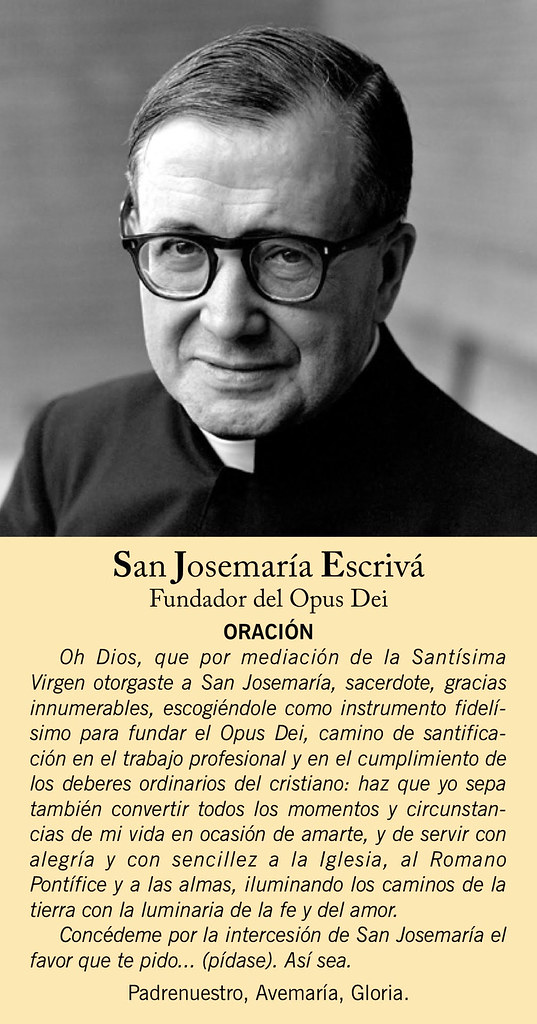
Praying through the intercession of St. Josemaría

Christians have always turned to the intercession of the saints to bring their prayers into God's presence. And with St. Josemaría it couldn't be any other way. Here is the prayer to ask our Lord for his intercession. 

Rezar por la intercesión de San Josemaría. Oh Dios, que por mediación de la Santísima Virgen otorgaste a San Josemaría, sacerdote, gracias innumerables, escogiéndole como instrumento fidelísimo para fundar el Opus Dei, camino de santificación en el trabajo profesional y en el cumplimiento de los deberes ordinarios del cristiano: haz que yo sepa también convertir todos los momentos y circunstancias de mi vida en ocasión de amarte, y de servir con alegría y con sencillez a la Iglesia, al Romano Pontífice y a las almas, iluminando los caminos de la tierra con la luminaria de la fe y del amor.  Concédeme por la intercesión de San Josemaría el favor que te pido... (pídase). Así sea.  Padrenuestro, Avemaría, Gloria.


Bibliography:

Opusdei.org

CARF Foundation and Altomonte Priestly College: a vital link for formation

The CARF Foundation and the Altomonte Priestly College in Rome have established an essential collaboration for the formation of priests. In order for priests to receive a high quality university education (degrees and doctorates) at the Pontifical University of the Holy Cross (PUSC), it was necessary to have specific accommodations where they could also foster their human and spiritual formation.

The union between the CARF Foundation and Altomonte also strengthens the pastoral mission of the Catholic Church throughout the world by caring for priests from all over the world.

What is the CARF Foundation?

Since its founding in 1989, the CARF Foundation has been dedicated to supporting the formation of seminarians and priests diocesans and religious from all over the world, providing educational and spiritual resources in renowned institutions in Rome and Pamplona.

Founded with the objective of promoting priestly vocations and prepare the future of the Church, plays a crucial role in promoting the Catholic faith in 131 countries.

Since February 14, 1989, the CARF Foundation has supported the training of thousands of
seminarians and diocesan and religious priests. Promoted by Blessed Alvaro del Portillo with the support of St. John Paul II, it lives in the urgency of providing a comprehensive and quality education to seminarians and diocesan priests of the Catholic Church.

The work of the Foundation has always grown thanks to the generosity of donors committed to the mission of strengthening the Catholic faith.

What is Altomonte Priestly College?

The Priests' College Altomonte is a residence and training center for diocesan priests studying in Rome, founded in response to a wish of St. Josemaría Escrivá, and promoted by the Pontifical University of the Holy Cross. 2011 and located near St. Peter's Basilica, seeks to offer an integral priestly formation in the human, spiritual, pastoral and intellectual dimensions.

To achieve this, it offers an environment conducive to spiritual and academic growth, providing future priests with the tools necessary to serve their communities with wisdom and compassion.

A special way to collaborate

The relationship between the CARF Foundation and Altomonte Priestly College is based on common goals: the integral formation of priests who are capable of facing contemporary pastoral challenges. The benefactors through the CARF Foundation support the students of Altomonte Priestly College by funding study aids, ensuring that no seminarian is prevented from completing his formation due to financial constraints.

This collaboration has resulted in the formation of numerous priests who now serve in various parts of the world, bringing with them the values and knowledge acquired in Rome. This joint effort not only benefits the priests, but also the communities they serve, contributing to the strengthening of the faith and the spiritual well-being of all Catholics.

A significant way in which the CARF Foundation and Altomonte Priestly College honor their benefactors is by celebrating a monthly Mass in their memory. This ceremony not only shows gratitude, but also strengthens the spiritual bond between the benefactors and the formative mission of both institutions.

One of the many beneficiaries of this collaboration is Koffi Edem Amaglo, a seminarian who has been able to advance his formation thanks to the support of the CARF Foundation. In his own words, Koffi expresses his deep gratitude: "The formation I have received in Rome has been invaluable for my pastoral mission. The CARF Foundation and the Altomonte Priestly College have made it possible for me to pursue my vocation with dedication and hope."

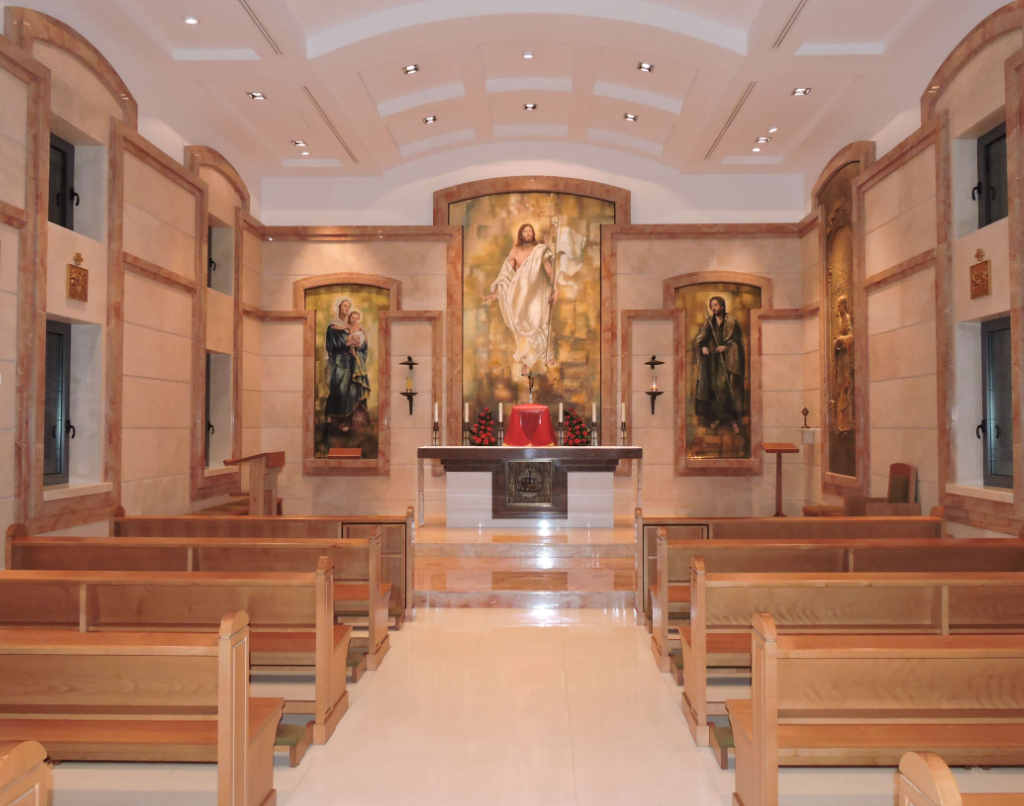
capilla-de-la-resurreccion-colegio-sacerdotal-altomonte
Chapel of the Resurrection at the Altomonte Priestly College.

How You Can Help

Through the CARF Foundation, there are multiple ways to collaboratefrom financial donations to the promotion of fundraising activities. Every contribution helps to ensure that seminarians and priests can continue their formation without interruption, which is vital for the future of the Church.

The relationship between the CARF Foundation and Altomonte Priestly College is a remarkable example of how cooperation and mutual support can have a lasting impact on the formation of priests. And, through their work together, they ensure that the priests of today are well prepared to lead the Church of tomorrow.

Body of Christ and Church: what is it and where is it kept?

 
Pope Francis explains the Body of Christ to us from the text of the Acts of the Apostles. The conversion of Saul, who would later be called Paul: "The conversion of Saul, who would later be called Paul, was a great event.Saul was a persecutor of Christians, but while he was walking along the road leading to the city of Damascus, suddenly a light enveloped him, he fell to the ground and heard a voice saying to him: Saul, Saul, why do you persecute me? He asks: Who are you, Lord?and the voice responds: I am Jesus, whom you are persecuting." (cf. Acts 9:4-5):

"This experience of St. Paul tells us of the depth of the union between Christians and Christ himself. When Jesus ascended into heaven, He did not leave us orphans, but with the gift of the Holy Spirit, union with Him has become even more intense." 

What is the Body of Christ?

We refer to the Corpus MysticumIn Latin, mystical body of Christ or Body of Christ when we speak of the Church as a single body, Christ himself being its Head. As the body of Christ we are one in Him. That is, we walk according to his precepts and united as Christians. In the sacrament of the Eucharist is contained, offered and received the very Body of Christ our Lord, through which the Church continually lives and grows.  

By transubstantiation, that is, by the conversion of the bread and wine into his Body and Blood, Christ becomes present in this sacrament. This is the Eucharistic sacrifice, memorial of the death and resurrection of the Lord, in which the Sacrifice of the cross is perpetuated down through the centuries, is the center of Christian life.

With the Eucharist we give meaning to and are the people of God and bring to completion the building up of the Body of Christ and the Church. The simple offerings of bread and wine, placed in the hands of the Lord, become the Body and Blood of Christ. The priest invokes the Holy Spirit that he may descend upon these gifts and also make Christ present among us. At every Mass, together with this bread and wine, we also present to God, in a symbolic way, something of ourselves.

Cuerpo de Cristo e Iglesia: qué es, oración y dónde se guarda – CARF

Being part of the Church "means being united to Christ and receiving from Him the divine life that makes us live as Christians, it means remaining united to the Pope and the Bishops who are instruments of unity and communion, and it also means learning to overcome personalisms and divisions, to understand each other better, to harmonize the variety and richness of each one; in a word: to love God and the people who are close to us more". General Audience Pope Francis.

Body of Christ and Church

"And this body has a head, Jesus, who guides it, nourishes it and sustains it. This is a point I want to stress: if the head is separated from the rest of the body, the person cannot survive. So it is in the Church: we must remain ever more deeply united to Jesus. But not only that: as in a body, it is important that the vital sap flows so that it can live, so we must allow Jesus to work in us, that his Word guides us, that his presence in the Eucharist nourishes us, encourages us, that his love gives strength to our love for our neighbor. And this always, always, always!

Here I come to a second aspect of the Church as the Body of Christ. St. Paul says that just as the members of the human body, though different and numerous, form one body, so the Church is the Body of Christ.So we were all baptized by one Spirit into one body.

Conflict, if not overcome well, separates us, separates us from God. Conflict can help us to grow, but it can also divide us. We do not go down the path of divisions, of fighting among ourselves, no! All united, all united with our differences, but united, united always, because that is the way of Jesus!

Unity is superior to conflict, unity is a grace that we must ask the Lord to save us from temptationsWe are not only a people of the world, but also of the divisions, of the fights among us and of the selfishness, of the gossip".  Catechesis of the Pope 19 June 2013.

Prayer to the Body of Christ

Help us, Lord, to be members of the Body of the Church always deeply united to Christ; help us not to make the Body of the Church suffer by our conflicts, our divisions, our selfishness; help us to be living members bound together by a single force, that of love, which the Holy Spirit pours into our hearts.

Pope Francis.

Cuerpo de Cristo e Iglesia: qué es, oración y dónde se guarda – CARF

"The members of the body of Christ follow Christ, who is the head of all." (Ephesians 1:22-23).

Where is the body of Christ kept?

Every time the priest at the Holy Mass recites the words of Consecration, the miracle of the Eucharist takes place; what was once bread and wine is now, under that appearance, the Body and Blood of Christ.

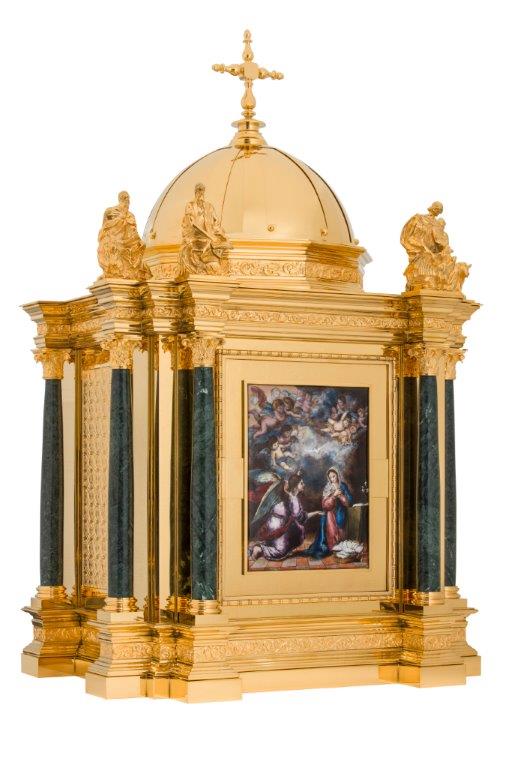
The tabernacle is the place where the Most Holy Eucharist, the consecrated Body of Christ, is reserved.. There is usually only one in each church or oratory. It is placed near the altar, in a prominent, sheltered and appropriate place for prayer. A corner that is easily identified by any Christian who enters the Church.

Ante the tabernacle in which the Body of Christ is guardedThe presence of a special lamp should be constantly displayed, indicating and honoring his presence.

We keep the sacred body of Christ within the Church in an immovable place, made of solid, non-transparent material, and closed, so as to avoid as much as possible the danger of profanation.


Bibliography

Catechesis of the Pope on June 19, 2013.
OpusDei.org.
Catechism of the Catholic Church.